Red Light Therapy - A Gentle Tool for Brain and Body Healing
The weeks after birth are a whirlwind - it’s one of the most vulnerable and stressful times for a new mom’s brain and body. Sleep is broken, your body is recovering from major tissue changes, breastfeeding can be painful, and hormones are shifting almost by the hour. It’s no surprise that anxiety and overwhelm is common.
In this article, we’ll explore how photobiomodulation (PBM) - also called low‑level laser therapy or red‑light therapy - can support postpartum healing in ways that also protect your emotional wellbeing, how it relates to an exciting new brain‑stimulation trial for postpartum depression in Austin, and why having a home PBM tool ready for perineal and cesarean healing may also become a helpful ally for your mood down the road.
Why Your Postpartum Mood Can Be So Fragile
After birth, your nervous system is asked to do something extraordinary:
· Recover from labor, surgery, perineal tearing, or both.
· Manage pain from swelling, sutures, cesarean wounds, breastfeeding, and musculoskeletal strain.
· Function on very little sleep while caring for a newborn around the clock.
· Ride massive hormonal shifts and emotional changes as you settle in.
Postpartum depression (PPD) is estimated to affect up to 1 in 7 moms, and many more experience significant anxiety or a prolonged “crash” once the initial adrenaline wears off.
Traditional supports like therapy and (when needed) medication can be lifesaving, but:
· Medications may take weeks to help and can come with side effects.
· Some mothers want to avoid or minimize medications while breastfeeding.
· Access to good therapy can be limited or delayed.
This is where non‑drug brain and body therapies - like PBM and the new SAINT neuromodulation trial at UT Austin - come into the conversation as additional tools. They don’t replace medical care, but they can support the underlying systems that keep you resilient.
What is Photobiomodulation (PBM)?
Photobiomodulation is a form of light therapy that uses specific red and near‑infrared wavelengths at low power to gently stimulate healing in tissues. Unlike surgical lasers that cut or burn, PBM devices are designed to nudge cells back toward health, not damage them.
At the cellular level, PBM:
· Is absorbed by mitochondrial enzymes (especially cytochrome c oxidase), helping cells make more ATP - energy for repair and function (it’s the antidote to postpartum depletion).
· Improves microcirculation, bringing more oxygen and nutrients to damaged or stressed tissues.
· Lowers inflammation and oxidative stress, both of which are elevated after birth and strongly linked to depression.
· Influences cell‑signaling pathways that support tissue repair, collagen production, and healthy immune responses.
In plain language: PBM gives your cells a more optimal environment to heal - more energy, less inflammation, and improved blood flow.
PBM for Postpartum Physical Healing (and why it matters for mood)
You feel your mood in your brain, but it is profoundly shaped by what’s happening in your body. Pain, poor healing, and exhaustion are fertile soil for depression and anxiety. PBM has been studied extensively in exactly the tissues that are most affected in birth.
Perineal Injury
Randomized trials using low‑level laser therapy on episiotomy wounds show:
· Reduced perineal pain intensity compared with controls.
· Faster and better wound healing on objective scales.
This means sitting, walking, and simply holding your baby can become easier sooner, which directly affects how you feel day to day.
Cesarean Wounds
Studies of low‑level laser therapy after cesarean section have found:
· Significant reductions in postoperative pain at multiple time points after surgery.
· Decreased need for painkillers, which can reduce side effects and support clearer thinking and breastfeeding.
· Accelerated wound healing and less redness and swelling when PBM is used repeatedly in the early recovery phase.
Again, less pain and better mobility mean more freedom to care for your baby the way you want to.
Breast and Musculoskeletal pain
PBM is also effective for:
· Nipple pain and blocked ducts.
· Chronic low‑back pain and other musculoskeletal issues, with improvements in both pain and depression scores when red light therapy is added to physical therapy.
When your body is less inflamed and painful, your nervous system can finally come out of “alarm mode,” which is a foundational step in protecting mood.
Red Light Therapy and Mood: Supporting Your Postpartum Brain
PBM is not currently a stand‑alone, proven treatment for postpartum depression, and it should never replace needed professional mental‑health support, but there is encouraging research on PBM for depression in general.
A 2024 systematic review and meta‑analysis of 11 randomized controlled trials (407 patients) found that PBM significantly improved depressive symptoms compared with sham or control, with a moderate effect size.
Some key points from this and related work:
· Transcranial PBM (tPBM) to the forehead/scalp over prefrontal regions has reduced scores on standard depression scales (like HAM‑D) in major depressive disorder.
· PBM appears safe and well‑tolerated, with low rates of adverse effects in depression trials.
· Mechanistically, PBM supports brain energy metabolism, blood flow, and reduced neuroinflammation in the very circuits that regulate mood and emotional resilience.
For a postpartum mom, this suggests an intriguing possibility: a therapy that not only calms and repairs sore tissues, but also gently supports the brain regions trying to cope with sleep loss, stress, and hormonal changes (and all safely supported).
We don’t yet have large postpartum‑specific PBM studies for postpartum mood disorders, so this is not a replacement for professional diagnosis and treatment.
If you already own a red‑light panel, it can still be a helpful part of your postpartum recovery, especially for whole‑body benefits like reduced inflammation, softer muscle tension, and better sleep quality, all of which indirectly support mood. When you stand close to the panel, your skin, superficial muscles, and circulation are getting the main dose, which is great for general recovery but only delivers a small fraction of that light to deeper brain tissue. That’s why, when we’re specifically trying to support mood circuits in the brain, I prefer devices and techniques that bring the light right up to the scalp/forehead over targeted areas I include in my protocols for my Solasta laser. Closer, more focused contact means more photons reach the cells we’re actually aiming to help, rather than being mostly absorbed in skin and hair along the way.
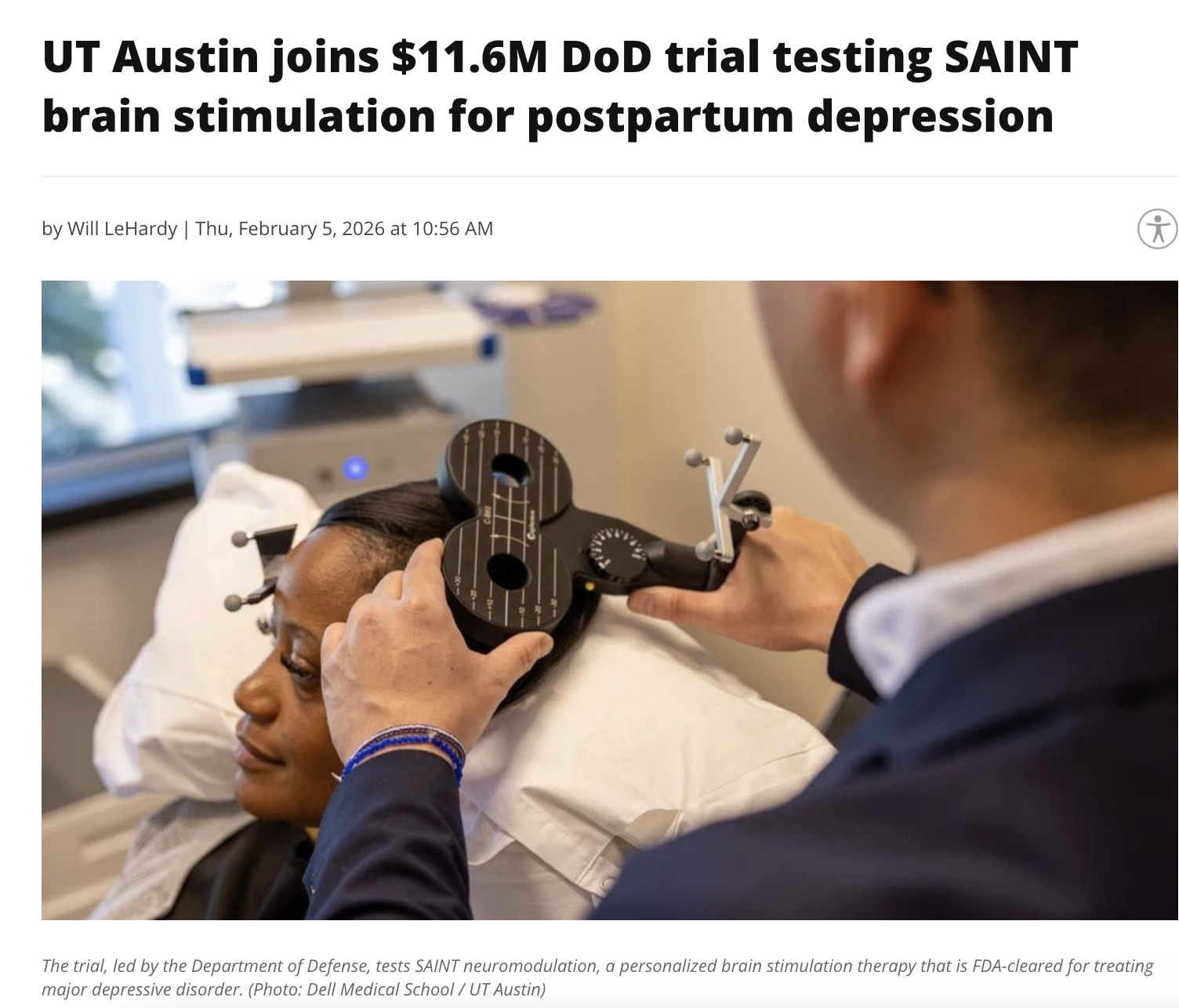
The new UT Austin SAINT trial: another non‑drug approach for postpartum depression
Right here in Austin, UT’s Dell Medical School has joined a major Department of Defense‑funded clinical trial testing an advanced, non‑drug brain stimulation called SAINT (Stanford Accelerated Intelligent Neuromodulation Therapy) for postpartum depression.
SAINT is a specialized form of repetitive transcranial magnetic stimulation (rTMS) that:
· Uses MRI to precisely target a region in the brain that is highly connected to mood‑regulation networks.
· Delivers short bursts of magnetic pulses many times per day over five days to rapidly reshape dysfunctional brain activity.
· Previously showed around 79% remission rates in about 2–5 days in people with severe, treatment‑resistant depression.
This new postpartum trial will enroll women 18 - 45 with peripartum‑onset major depression to see if SAINT can safely and quickly relieve PPD symptoms without medication. Unlike many depression studies, participants do not have to fail medications first, which is crucial when time and breastfeeding both matter.
What Photobiomodulation and SAINT share - and where they differ
At first glance, a powerful hospital‑based TMS machine and a quiet handheld PBM device don’t look related. Yet both approaches are built around a similar hypothesis: that supporting the brain directly, without drugs, can help reset mood circuits in a safer, more targeted way.
What they Have in Common:
· Non‑drug, brain‑focused support
Both are non‑medication options that aim to improve mood by acting on the brain rather than the gut, liver, or whole body via systemic drugs.
· Attention to prefrontal mood networks
SAINT uses imaging to guide magnetic stimulation to a key prefrontal region; PBM protocols for depression shine NIR light over similar frontal areas.
· Neuroplasticity as a goal
SAINT uses intense magnetic pulses to change neuronal firing and connectivity; PBM supports mitochondrial function, blood flow, and signaling cascades that create a more favorable environment for neuroplastic change.
· A focus on vulnerable periods
Both are being pursued precisely because the postpartum period is high‑risk and current options don’t serve every mother well.
Important differences
· SAINT is fast, intensive, clinic‑based, and highly targeted - a kind of “brain reset” performed under specialist supervision.
· Photobiomodulation is gentle, often slower in onset, and can be integrated at home to support both local healing and broader brain‑body balance.
You might think of SAINT as a high‑powered retuning of the brain’s circuits, and PBM as daily nourishment for those circuits and the body they live in.
Why a Home PBM Tool Makes Sense for Immediate Postpartum - and Later Mood Support
Because perineal tears, and cesarean wounds are almost “expected” postpartum issues, investing in a home PBM tool for tissue healing makes immediate sense. The mood benefits may not be needed right away - but depression and anxiety can emerge or intensify weeks to months after birth, once the initial adrenaline has faded.
The Solasta laser is a home‑use PBM device designed specifically for women’s health, with common postpartum uses that include:
· Perineal tears or swelling (without skin contact in the earliest days).
· Cesarean wound healing and later scar remodeling.
· Pelvic floor soreness and pelvic pain.
· Breast and nipple pain related to breastfeeding.
Photobiomodulation’s track record in wound healing, perineal and cesarean pain, and musculoskeletal issues means you are not buying a device “only for mood” - you are equipping yourself with a practical, evidence‑informed tool for the most painful and limiting parts of postpartum recovery.
And because those same photons also support brain energy, blood flow, and inflammation, the Solasta laser can later be used (with appropriate guidance) as part of a broader plan to support focus, sleep quality, and emotional resilience if mood symptoms start to creep in.
If you’re pregnant now or planning for a future birth, it’s easy to focus only on the labor. But the real marathon is postpartum - healing your body, feeding your baby, and caring for your own mind and heart in the months that follow.
Photobiomodulation is grounded in science to accelerate recovery and comfort in those early weeks while you find your balance.
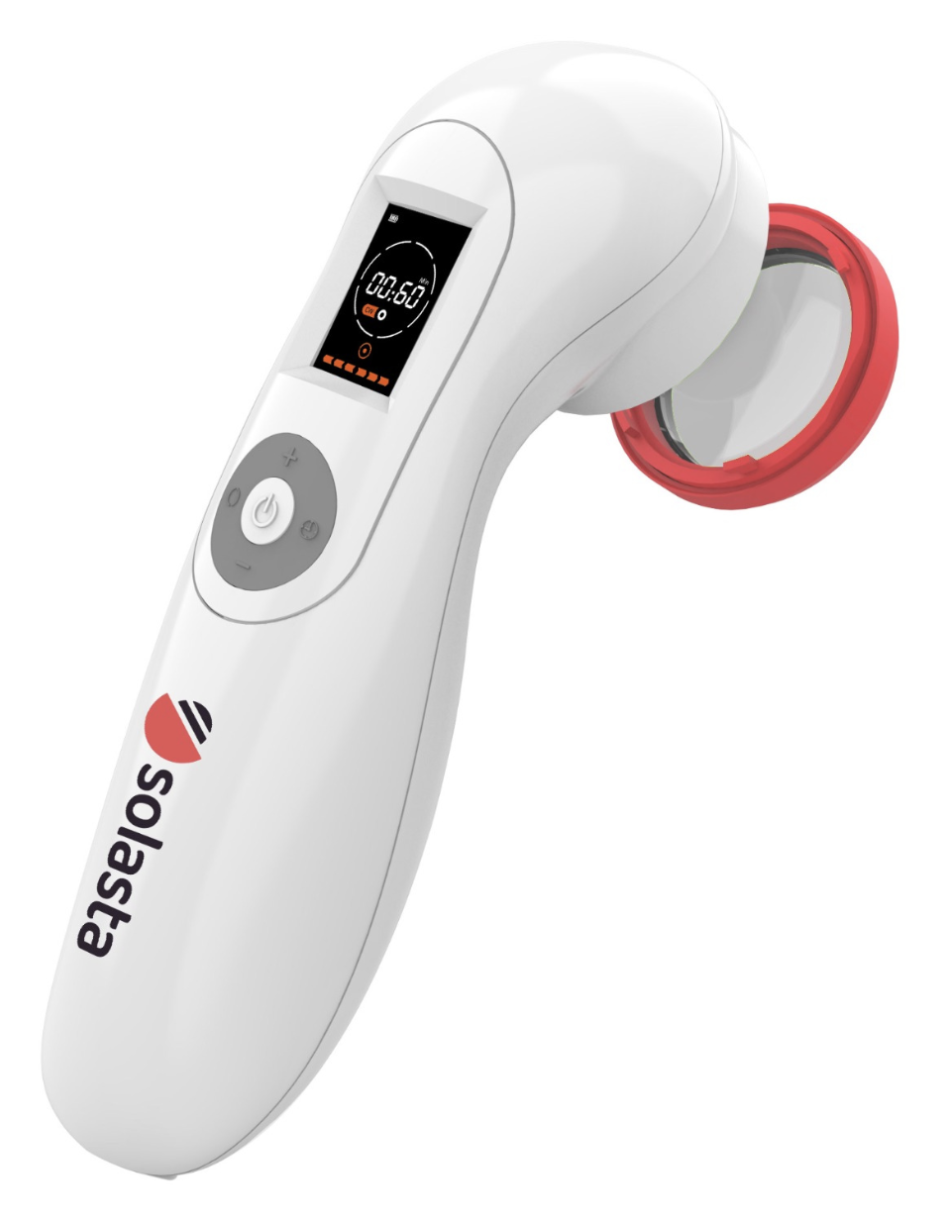
Solasta hand laser for accelerated postpartum healing, pain management, and recovery.
After purchase you’ll receive a health history form and I’ll write a personalised protocol for you based on the current evidence and what I see working in the community with my clients.