New Insights on Cesarean Scars & Placenta Accreta
If you’ve had a C-section and are dreaming of growing your family again, I know that "what if" thoughts can sometimes creep in. One topic that’s been coming up more often in our community is Placenta Accreta especially as the rates of cesareans continue to increase. If VBAC is an option - it’s critically important to talk to your provider about how VBAC can protect your future fertility.
We used to think placenta accreta was just a "placenta problem," but recent groundbreaking new research is shifting the conversation. It turns out, the secret might actually lie in how our bodies heal after surgery.
So what does this mean for you and how can you take charge of your reproductive health.
Placenta accreta is a serious pregnancy complication that occurs when the placenta attaches too deeply and firmly to the wall of the uterus.
In a healthy pregnancy, the placenta is like a temporary "velcro" organ; it stays attached during pregnancy to provide oxygen and nutrients, but easily peels away after the baby is born. With accreta, the placenta grows into the uterine wall like the roots of a tree, making it unable to detach naturally.
The Three Levels of Severity
Providers often refer to this as Placenta Accreta Spectrum (PAS) because it can vary in depth:
Accreta: The placenta attaches firmly to the lining of the uterine wall.
Increta: The placenta grows deeper, into the actual muscles of the uterus.
Percreta: The most severe form, where the placenta grows all the way through the uterine wall and may attach to nearby organs, like the bladder.
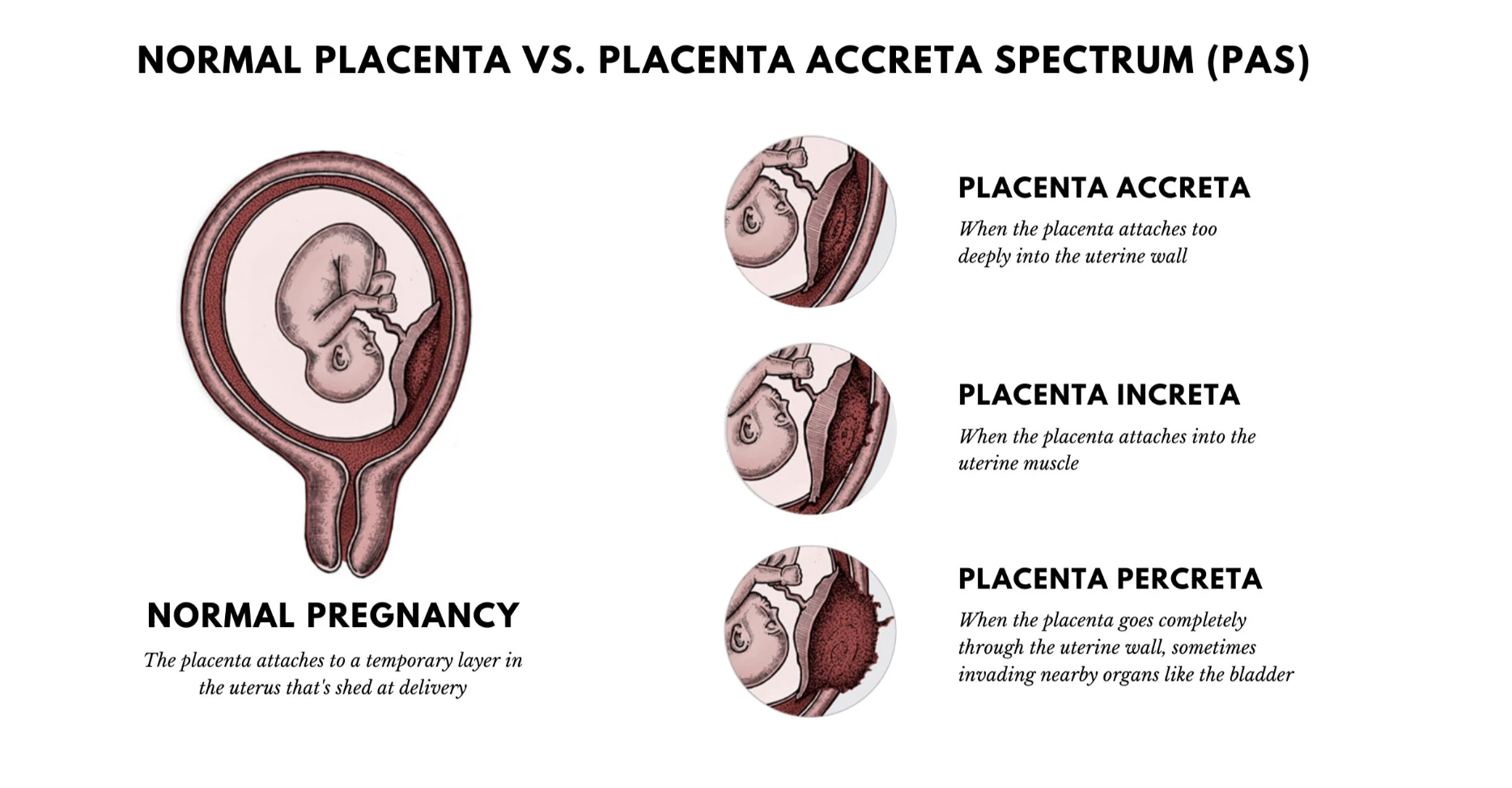
Placenta Accreta Spectrum
How common is this condition?
The rate of placenta accreta has risen significantly over the last few decades, largely mirroring the increase in C-section rates.
Historical Rate: In the 1980s, it affected about 1 in 2,500 pregnancies.
Current Rate: Modern studies show it now affects approximately 1 in 272 to 1 in 588 pregnancies.
Risk Groups: For women who have had multiple cesareans, the risk jumps dramatically. If a woman has had four or more C-sections, her chances can be as high as 1 in 15.
Why is it so dangerous?
Placenta accreta is considered one of the most high-risk conditions in modern obstetrics for two primary reasons:
1. Catastrophic Bleeding (Hemorrhage) Because the placenta is deeply embedded in the uterine wall and its blood vessels, any attempt to remove it manually after birth can cause massive, life-threatening bleeding. The uterus has a massive blood flow during pregnancy, and if the placenta doesn't detach properly, the body cannot close off those blood vessels. This can lead to:
The need for massive blood transfusions.
Organ failure (kidney or lung failure) due to blood loss.
Disseminated intravascular coagulopathy (a condition where the blood loses its ability to clot).
2. Surgical Complications To save a mother’s life and stop the bleeding, a hysterectomy (removal of the uterus) may be required immediately following the cesarean. If the placenta has grown into other organs (like the bladder), surgery becomes much more complex and carries a higher risk of injury to those organs.
Because of these risks, a diagnosis usually requires a specialized "Accreta Team" and a planned delivery in a hospital equipped with a level IV NICU and a massive blood bank.
What’s Really Happening Under the Surface?
Researchers recently took a closer look at uterine tissue, comparing healthy cesarean scars to those where Accreta developed. Here is the "aha!" moment:
It’s all about the collagen: In healthy healing, collagen (your body’s "scaffolding") is neat and organized. In Accreta cases, that collagen was tangled and irregular.
The "Boundary" Factor: Because the scar tissue was disorganized and inflamed, the normal boundary between the uterus and the placenta was weakened. This makes it easier for the placenta to grow deeper than it should.
Healing is Individual: We all heal differently! Factors like genetics, previous infections, and even how many surgeries you’ve had play a role in whether a scar becomes "strong and organized" or stays "inflamed and messy."
A Glimmer of Hope: Photobiomodulation (Red Light Therapy)
I’m always looking for "what’s next" in women’s wellness, and Photobiomodulation (PBM) - or Red Light Therapy - is a total game-changer in the world of healing. Photobiomodulation has been shown in other tissues to support wound healing, improve collagen quality, and reduce long‑lasting inflammation (unfortunately your red light mask is great for superficial collagen production but is unlikely to reach the deeper levels of the uterus).
While we are still in the early stages of research specifically for Accreta, we know that PBM is incredible for:
Boosting collagen quality.
Calming long-term inflammation.
Supporting faster, cleaner wound healing.
While PBM is a promising tool for healthier scarring, it’s not yet a proven "fix" for Accreta. Always, always work with a knowledgeable clinician before starting new therapies.
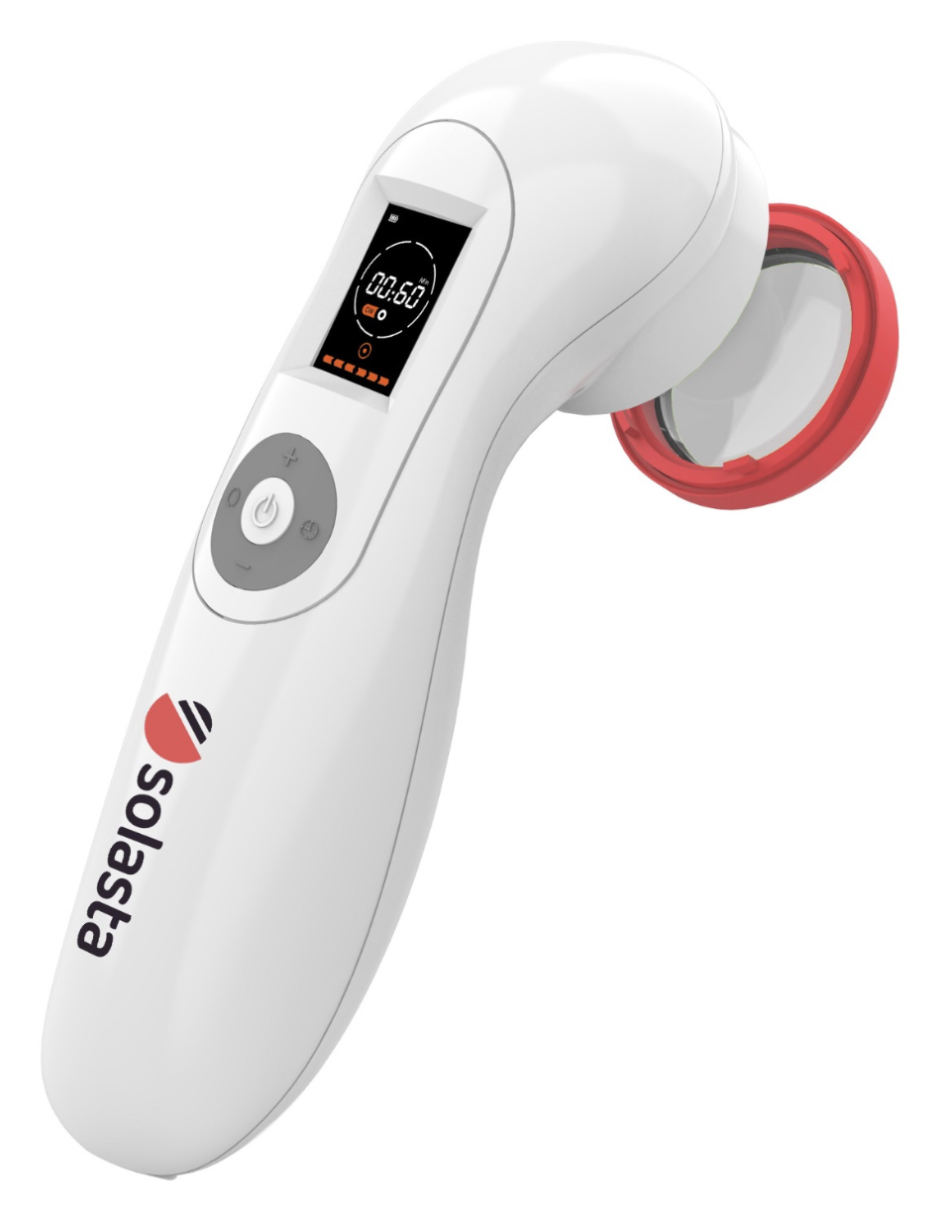
Pain management, collagen production, inflammation modulation
3 Steps You Can Take Today
I’m a big believer in taking informed action. If you’re planning a pregnancy after a c-section, here is your mini-checklist:
Get red light therapy on your wound as soon as possible after your cesarean. In research photos the scars heal more quickly and smoothly.
Check in with your provider: Have a heart-to-heart about your risk level and ask for a specific plan to monitor your scar health.
Listen to your body: Are you experiencing pain, adhesions, or symptoms that feel "off"? These are clues about how your body healed.
Build your dream team: If you’re curious about photobiomodulation find a practitioner who specializes in pelvic health and pregnancy.
If you know you’re going to have a cesarean - purchase your home laser here and start protecting your future family building immediately after your baby arrives (it’ll help with pain too).
You’ve got this! Your body is capable of amazing things, and being informed can be a superpower!
Tracy
Additional Resources
Cesarean Healing
https://blog.tracydonegan.org/blog/red-light-therapy-for-secondary-infertility-after-cesarean
https://blog.tracydonegan.org/blog/red-light-therapy-and-c-section-recovery
Placenta Accreta
https://www.uclahealth.org/news/release/ucla-study-links-scar-healing-dangerous-placenta-condition
https://www.nytimes.com/2025/11/06/health/placenta-accreta-c-sections.html