Can I tell you about two of my favorite "aha" moments in women's health and red light therapy?
First was the London PBM conference in 2024 and meeting US researchers using blue light to restore antibiotic receptivity to cells that were formally resistant to antibiotics…that is HUGE - especially for some of those hard to treat infections that can’t seem to be cleared with antibiotics. Then a few months ago I was digging into how blue light affects the bacteria behind bacterial vaginosis (BV), and I came across something that explained so much. I've heard so many women say, "The smell went away, so I stopped my antibiotics… and two weeks later it was back."
It turns out there's a really good reason for that. Once you understand it, you'll never look at BV the same way again.
If you searched "red light therapy for BV," you're in the right place, but here's the surprise: the star of the show is actually blue light, with red and near-infrared playing an important supporting role.
So settle in and let’s take a closer look at this annoying bacteria.
First, what's actually going on with BV?
Your vagina has its own little ecosystem. When things are healthy, it's mostly lactobacilli, the good guys. They make lactic acid, which keeps the environment acidic and protected.
With BV, that balance flips. The lactobacilli drop, and a crowd of other bacteria moves in. Most of them are anaerobes, which means they thrive in low-oxygen spaces. The best-known one is called Gardnerella.
BV isn't a hygiene problem, and it isn't something you did wrong. It's an imbalance, and it's incredibly common (and couples can share it between each other).
Where that smell really comes from
Here's the part most of us were never taught.
That fishy odor comes from amines, compounds that some BV bacteria make as they break down proteins. Prevotella is one of the main culprits.
Amines get much smellier when vaginal pH rises. That's why so many women notice the odor is worse:
· After sex, because semen is alkaline.
· During or just after your period, because blood raises pH too.
Your body isn't betraying you. It's chemistry.
The twist: the smell and the infection aren't the same thing.
Here's what I found fascinating. Gardnerella, the main BV bacterium, doesn't make these amines at all.
So the bacteria creating most of the smell aren't the ones holding BV together. Gardnerella also builds something called a biofilm, a sticky protective layer on the vaginal wall. You can think of it as a little fortress that's hard for both antibiotics and light to get into.
Put those two facts together and you get this:
When blue light treatment knocks down the smelly bacteria, the odor can fade quickly, even while Gardnerella is still hanging on in its biofilm.
That's why "no smell" doesn't mean "no BV." And it's why finishing your full antibiotic course matters so much, even when you feel better on day three.
So where does blue light come in?
This is the fun part. Let me break it down simply.
Many bacteria carry natural molecules called porphyrins. Think of them as tiny built-in solar panels. They're especially good at soaking up blue light, around 405 - 415 nm.
Here's the problem for the bacteria. Blue light is high-energy light, and those little solar panels absorb far more of it than the cell can safely handle. It's like overloading a solar panel with so much high-voltage energy that it shorts out the whole power grid inside the cell.
That surge of energy gets passed to nearby oxygen and creates reactive oxygen species, little sparks of oxidative stress. They fry the cell's wiring from the inside: its outer wall, its proteins and its DNA.
No drug is needed. The bacteria are carrying the very equipment that takes them down, and blue light flips the switch.
A few things I find fascinating:
· Some BV bacteria are loaded with porphyrins. Prevotella species collect iron-rich, porphyrin-type pigments on their surface. In lab studies, some types were knocked out by very small doses of blue light.
· It can still work where oxygen is low. That matters, because the vagina is a low-oxygen environment, and Prevotella has been killed by blue light even under those conditions in the lab.
· Your good bacteria appear to be much tougher. Lactobacilli seem to need far higher doses before blue light affects them. It's not perfect, but it points toward pruning the troublemakers rather than wiping out everything.
· Bacteria don't seem to become resistant to it easily. Lab studies that exposed bacteria to blue light over and over haven't found the kind of resistance we see with antibiotics.
And remember those smelly amines? Because blue light hits amine-makers like Prevotella so well, it may help ease the odor. That's another reason to keep going until your plan is complete, not just until the smell is gone.
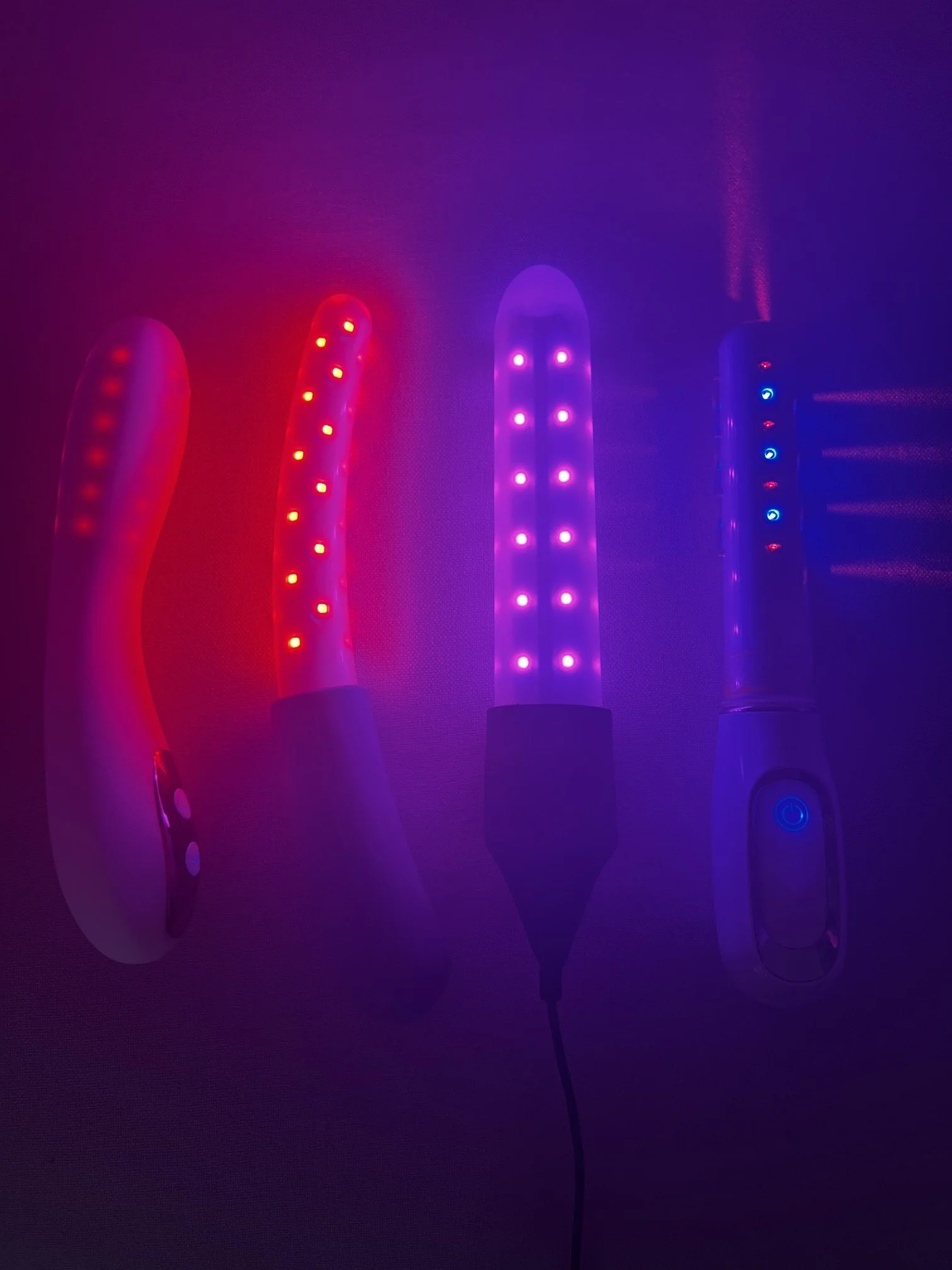
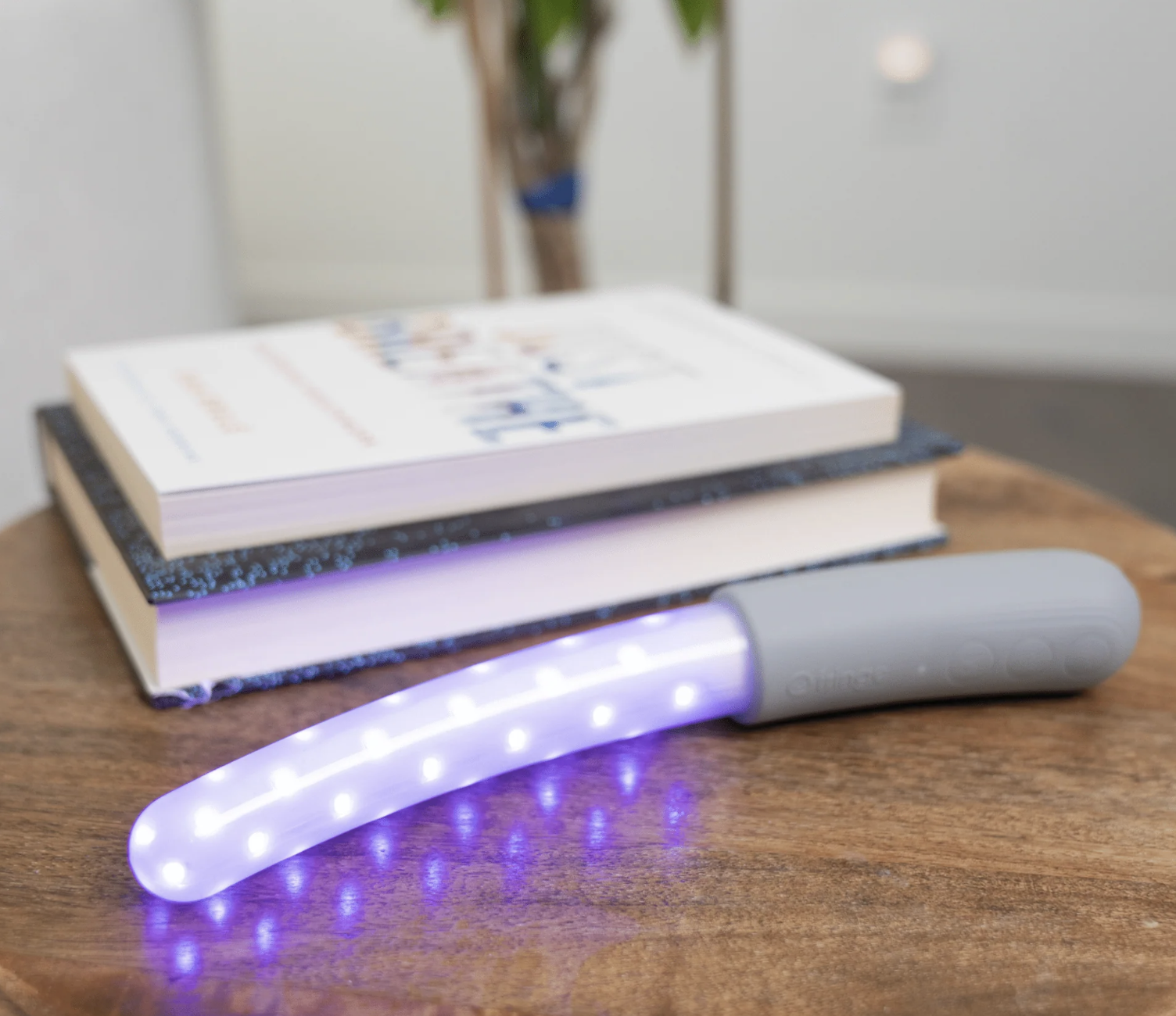
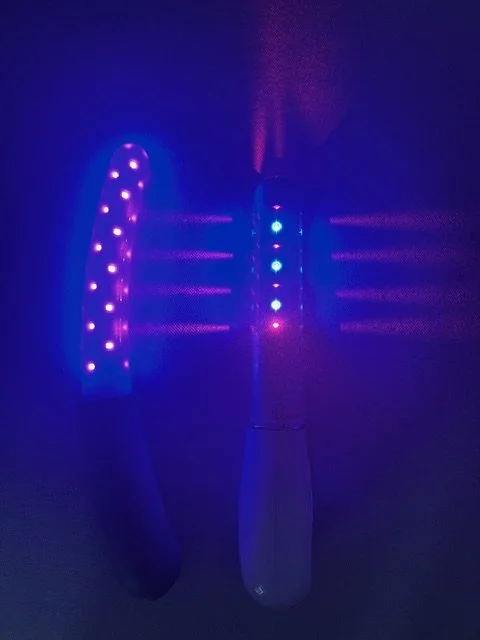
Does red light therapy help BV?
Blue light is a high-energy wavelength. It's great for targeting bacteria, but I like to follow it with red and near-infrared light in my protocols. That combination is more about supporting the vaginal tissue itself, and less about the bacteria.
(Compare popular red light pelvic wands for vaginal health - remember you need to be able to activate blue and red/NIR separately).
Here's my approach: blue first, then red and near-infrared. During active BV, I don't use red and near-infrared on its own.
How my pelvic wand BV protocol works
My protocol using my favorite combined blue/red/NIR pelvic wand has three simple parts:
1. Antibiotic week.
2. Consolidation (weeks 2 - 4).
3. If symptoms come back. A short plan to ease symptoms while you wait to see your provider and start antibiotics.
Can My Partner Use Blue Light Too?
In men, BV bacteria live in two places: on the skin of the penis and inside the urethra. Blue light only reaches about a millimeter into the skin, so it can't get inside the urethra, where the main BV bacterium lives but the wand can be used over the head of the penis and other penile sites. So your partner still needs his antibiotics: the tablets reach inside, and the cream covers the skin. Light is only ever an extra layer of support on the outside for men (there is no research on men using blue light for BV yet) and hygiene would be so important if you’re sharing the device.
If you've been stuck in the BV cycle, I want you to know there's real hope, and you don't have to figure it out alone. (Please make sure your partner gets treated too).
Tracy
Your personalized protocol is based on your health history, medication use and health goals and is included in your device purchase (along with unlimited check-ins to answer any questions your have).
Resources:
Amines, pH and BV odor (Srinivasan et al., mBio): https://journals.asm.org/doi/pdf/10.1128/mbio.00204-15
Gardnerella doesn't produce amines (Chen et al., Journal of Clinical Investigation): https://www.jci.org/articles/view/109382
Bacteria linked to BV odor (Journal of Lower Genital Tract Disease): https://journals.lww.com/jlgtd/fulltext/2022/01000/the_vaginal_microbiome__ii__vaginal_dysbiotic.16.aspx
Blue light and porphyrin-rich bacteria such as Prevotella (Soukos et al.): https://pmc.ncbi.nlm.nih.gov/articles/PMC1068628/
Blue light killing Prevotella-type bacteria under low oxygen (Hope et al.): https://livrepository.liverpool.ac.uk/3002948/1/HopeCK_PDT Pging.pdf
Blue light and lactobacilli sensitivity (FEMS Microbiology Letters review): https://academic.oup.com/femsle/article/364/2/fnw270/2631358
Blue light and resistance (Frontiers in Medicine): https://www.frontiersin.org/articles/10.3389/fmed.2022.905606/full
415 nm light and BV bacteria (Frontiers, 2026): https://www.frontiersin.org/journals/cellular-and-infection-microbiology/articles/10.3389/fcimb.2026.1836549/full
CDC BV treatment guidelines: https://www.cdc.gov/std/treatment-guidelines/bv.htm