In 2007, the iPhone changed how we navigate the world. In 2014, one of my first companies GentleBirth went fully digital to change how we navigate birth. Today, we are standing on the edge of the next great frontier in maternity care: Virtual Reality (VR).
When I first started exploring VR for labor, it felt like science fiction. I shared the story of Erin Martucci, who in 2016 famously used a VR headset to labor on a virtual beach in New York without medication. Since then, the "curiosity" of VR has evolved into a legitimate, evidence-based tool for the modern birth kit. Then some clients asked about it and began offering it as an extra tool for labor.
If you’re looking for ways to stay focused, calm, and comfortable during labor - especially if you’re hoping to avoid or delay medical intervention - here is why VR is making waves again in 2026.
How VR Rewires the Labor Experience
It’s not just about "distraction." VR works through a process called attentional focus. Your brain has a limited capacity for processing signals. When you are fully immersed in a 360-degree virtual world - watching a sunrise, breathing with a visual guide or even playing a game - your brain is so busy processing those high-priority "happy" signals that it has less bandwidth to process pain signals.
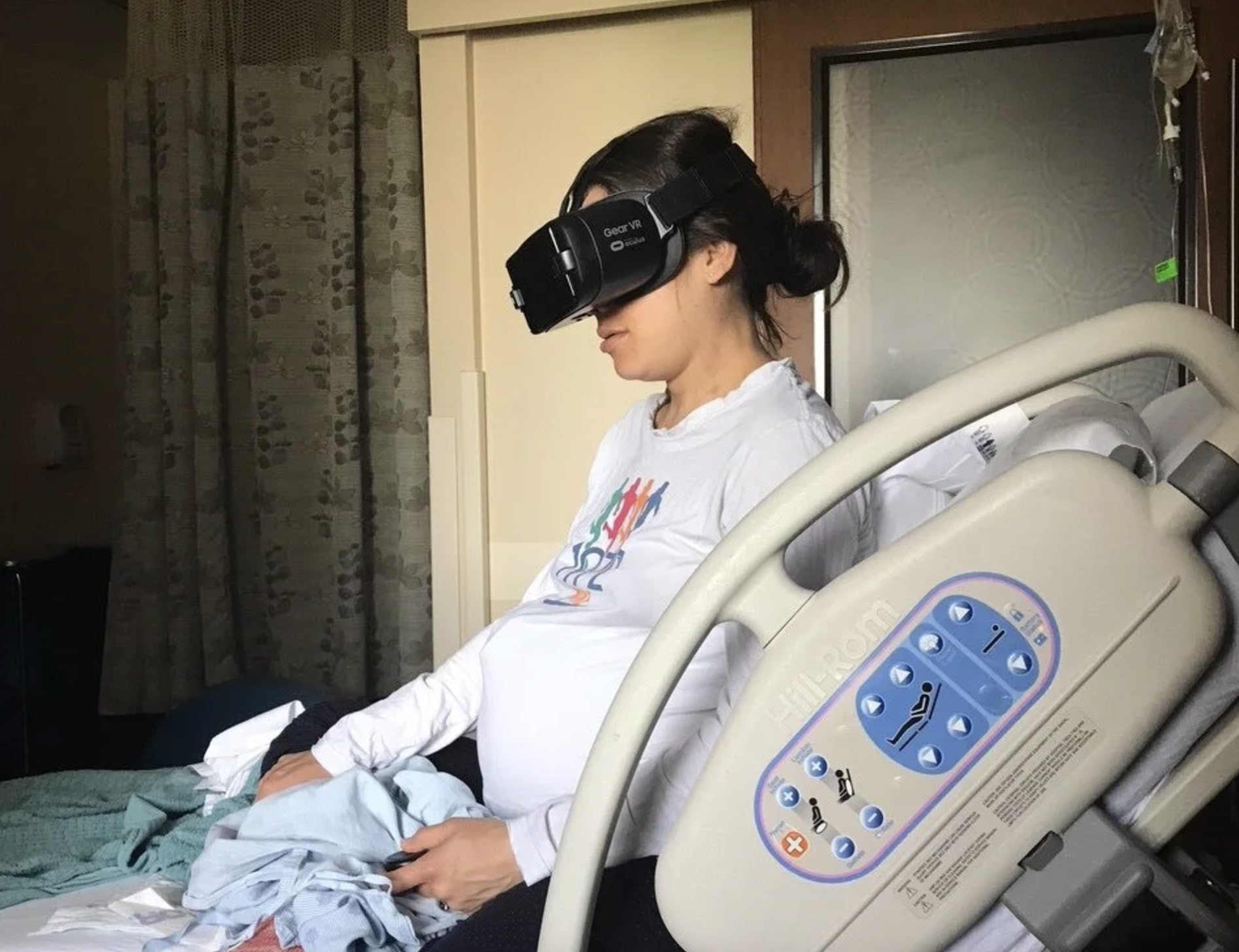
One of my clients using VR during her induction.
The New Science: What the Recent Research Says
Since my last update, several major studies (including a 2024 meta-analysis) have confirmed that VR isn't just a gimmick - it’s a physiological game-changer.
Significant Pain Reduction: Recent randomized controlled trials (RCTs) show that laboring women using VR report significantly lower pain scores compared to those with standard care. In one 2025 study, users reported a 35–50% reduction in perceived pain intensity during acute procedures.
The "Anxiety Loop": We know that fear leads to tension, and tension leads to more pain. New research highlights that VR significantly lowers maternal anxiety and heart rate. By calming the nervous system, VR helps prevent the "fight or flight" response that can stall labor.
Lowering Opioid Use: A 2024 review found that hospitals integrating VR into their pain protocols saw a measurable decrease in the request for IV opioids. For moms who want to stay mobile and "present" without the grogginess of certain medications, VR offers a powerful bridge.
Better for Baby, Too: Fascinating new data suggests that because VR helps regulate the parent’s heart rate and blood pressure, it may lead to more stable fetal heart rate patterns and more efficient labors.
This next video shows a mom having an ECV to help baby move into a head down position if baby is breech (in the US many hospitals do this with an epidural). You have options.
VR vs. The Epidural: Do You Have to Choose?
Absolutely not. VR is a versatile tool. It can be used:
As a Primary Tool: For those planning an unmedicated birth who want an "immersion" experience to help cope.
During the "Gap": To manage early labor at home or while waiting for an epidural to be placed.
During Repair: To provide a calm distraction if sutures are needed after birth and you’re nervous about holding your baby. (An Iranian study showed significant pain reduction during suturing).
Why It Pairs Perfectly with GentleBirth (Brain Training for Birth)
At GentleBirth, we’ve always focused on training the brain to change the birth. VR is simply an "extra-strength" version of the visualization and mindfulness work you’re already doing in the GentleBirth App. It’s "digital Hynobirthing" on steroids.
Whether you’re laboring in a hospital, a birth center, or at home, technology is finally catching up to the needs of laboring moms. As headsets become lighter, wireless, and more affordable, I expect to see VR become as common in birth suites as the birth ball.
Frequently Asked Questions about VR in Labor
1. Can I use VR if I’m planning an unmedicated birth? Yes! VR is a powerful non-pharmacological tool. It works by "occupying" the brain’s pain pathways with immersive visual and auditory signals, making it an excellent addition to your unmedicated birth toolkit alongside breathing and movement.
2. Does VR actually reduce labor pain? Recent 2024 and 2025 clinical trials indicate that VR can reduce perceived pain intensity by 35% to 50%. While it doesn't "numb" the body like an epidural, it significantly alters how your brain processes and reacts to the sensations of labor.
3. Is it safe for the baby? There is no evidence of risk to the baby. In fact, because VR helps moms stay calm and regulated, it can lead to more stable maternal heart rates and oxygen levels, which is always a plus for the baby’s well-being.
4. Will VR make me feel nauseous during labor? Motion sickness (cybersickness) is a common concern. However, modern high-resolution headsets and "static" VR experiences (like sitting on a beach rather than moving through a game) have drastically reduced this risk. It is always recommended to test a headset before active labor begins.
5. Can I use VR at the hospital? Most hospitals are very supportive of VR as a "distraction therapy." Since most modern headsets are wireless (like the Meta Quest or Pico), they don't interfere with hospital equipment, though you should discuss it with your birth team during your prenatal visits.
Be prepared to have to fight your partner to use it…
Resources
Journal of Clinical Medicine (2024): "The effect of virtual reality on pregnant women and fetuses: a systematic review and meta-analysis."
TITAN 2025 Guidelines: "Virtual reality as a transformative tool in pain management."
VRAIL Study Updates: Longitudinal data on VR's impact on reducing pharmacological intervention in nulliparous women.