Solasta Laser: Clinical‑Grade Red Light Therapy at Home for Women’s Health and Hormone Support
Solasta is a clinical‑grade handheld cold laser that delivers 650 nm red and 808 nm near‑infrared light in a powerful, portable, skin‑contact device for fertility, pregnancy, postpartum, menopause, pain, lymph, lactation, and even pets. It’s designed to bring in‑clinic, level photobiomodulation (PBM) into your home, without heat, drugs, or downtime.
Meet Solasta: Clinical Light Therapy, Finally at Home
Solasta is a handheld GaAlAs cold laser that combines 650 nm red light with deeper‑penetrating 808 nm near‑infrared (NIR) light, giving you both surface and deep‑tissue support in one device. With high total laser output, three power levels, continuous and pulsed modes, and programmable treatment times, it is one of the most powerful handheld home lasers currently available in the U.S.and Europe for women’s health.
Unlike large expensive clinic units, Solasta is compact, cordless, and rechargeable, so it can move with you - from your sofa to the clinic and even into labor and postpartum spaces - without cables and EMFs.
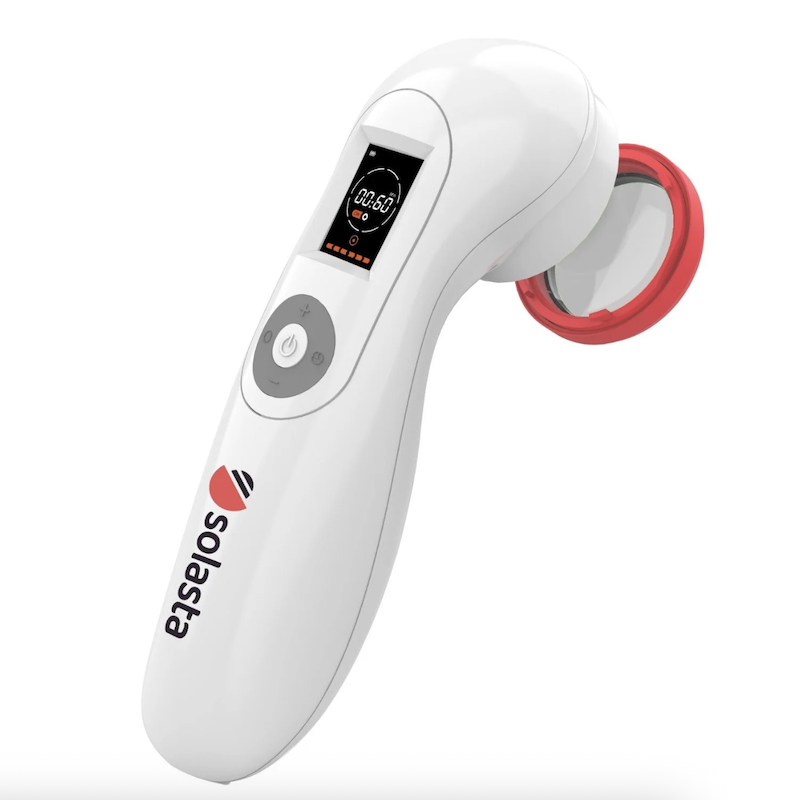
What Solasta Actually Is (and Why It Matters)
Solasta is a Class 3B cold laser that uses GaAlAs semiconductor diodes arranged to deliver deep‑acting 808 nm laser and more superficial 650 nm light across a focused treatment head. The simple control panel lets you select power, mode (continuous vs pulsed), and treatment time, so dosing can be scaled for sensitive tissues (like the perineum or nipples) or more robust structures (like hips, knees or the abdomen).
Because Solasta is non‑thermal at therapeutic settings, most people feel little more than mild warmth during sessions. This makes it a suitable choice when you need significant biological support but want to avoid systemic medications, especially around fertility treatments, pregnancy, breastfeeding, and long‑term hormone health.
How Red Light Therapy - AKA Photobiomodulation Works
Photobiomodulation (PBM) is the use of specific red and near‑infrared wavelengths to “nudge” cells into better function, primarily through their mitochondria. Light in the 600 - 1000 nm range is absorbed by chromophores like cytochrome c oxidase in the mitochondrial respiratory chain.
When your cells absorb these photons:
· Electron transport speeds up, increasing mitochondrial membrane potential and ATP (cellular energy) production, so cells have more usable energy to repair and function optimally.
· There is a brief, controlled rise in reactive oxygen species (ROS) and nitric oxide (NO), which act as signaling molecules to turn on repair, antioxidant, and anti‑inflammatory pathways.
· This cascade can improve local blood flow, modulate inflammatory mediators, and enhance tissue regeneration in muscles, nerves, glands, and skin.
For fertility support, pelvic pain, lactation, wound healing, and cognitive function, PBM doesn’t “force” the body, it supports the cellular conditions for better signaling, calmer inflammation, and more efficient repair.
When cells “drink in” red and near‑infrared light, their internal batteries (mitochondria) charge up and start making more clean energy. With more energy on board, cells can do their jobs better - whether that’s healing tissue, making hormones, or calming irritated nerves.
At the same time, cells send out tiny chemical “text messages” (ROS and nitric oxide) that tell the body, “Time to repair, reduce inflammation, and switch on antioxidant defenses.” This doesn’t overwhelm the system; it’s a brief, controlled nudge that kick‑starts the body’s own healing programs.
All of this together can boost local blood flow, quiet down excessive inflammation, and help damaged or tired tissue - muscles, nerves, glands, and skin - repair more efficiently. For things like reproductive support, pelvic pain, breastfeeding issues, wound healing, and brain fog, the key idea is that red light therapy isn’t forcing the body to do something unnatural; it’s giving your cells better conditions so your own biology can do what it’s designed to do, just more effectively.
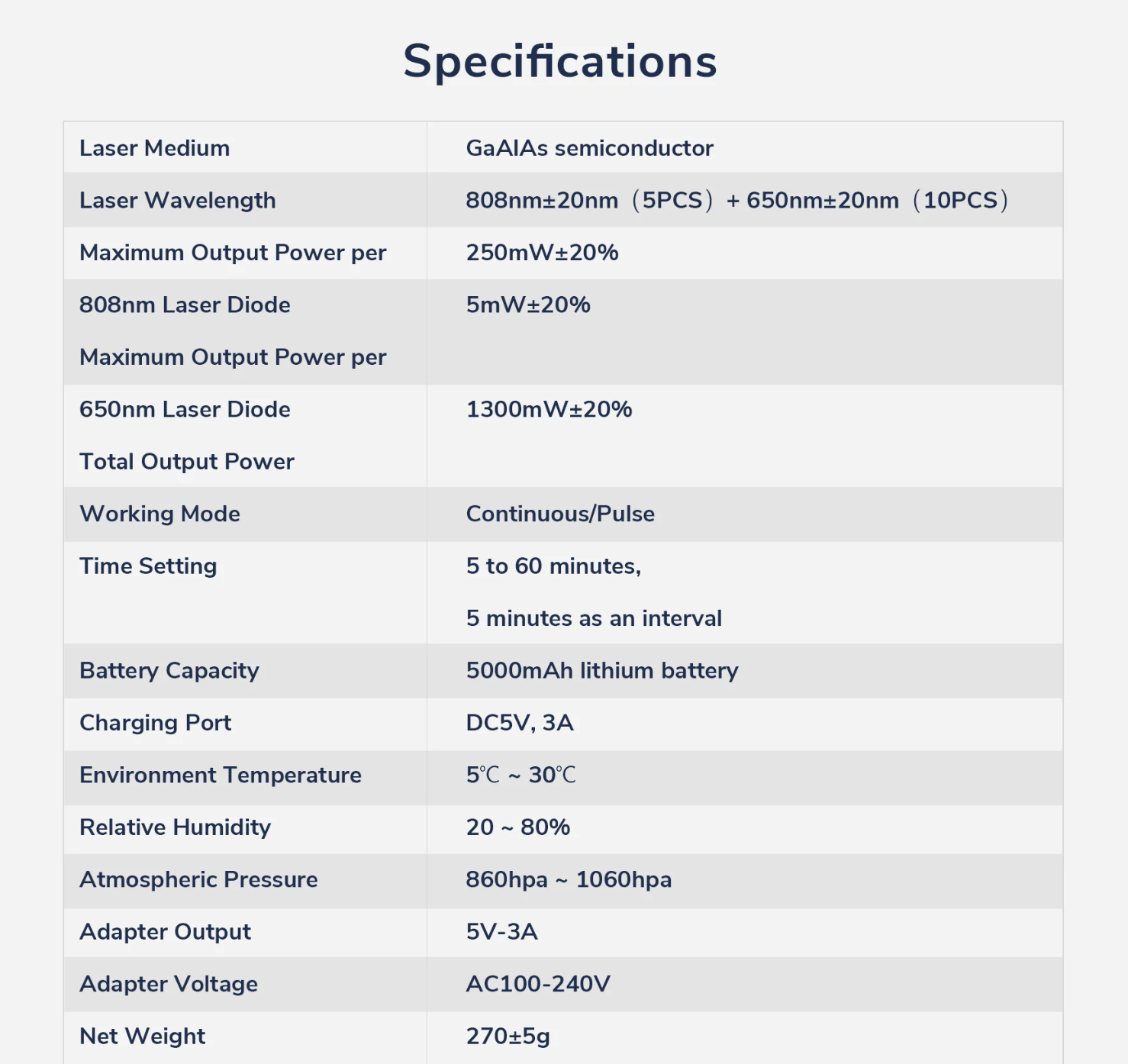
Laser Specs - 1.3 W (1300 mW) in continuous or pulsed mode.
Why Skin Contact Matters So Much
Every centimeter of air or fabric between your skin and a light source reduces how much energy actually reaches your tissues. For deep structures like ovaries, uterus, hip joints, and deeper breast tissue, this drop‑off matters.
Skin contact matters because it:
· Maximizes irradiance (mW/cm²) at the surface, which is critical for delivering a meaningful dose into those deeper layers.
· Minimizes reflection and scatter, so more light photons enter the body instead of bouncing away.
· Allows high‑power devices like Solasta to achieve therapeutic dosing in shorter, more predictable session times.
This is why Solasta is built for direct skin contact (not on open wounds) and why, for more complicated health challenges, panels across the room are rarely enough on their own.
Laser vs LED: Coherent and Collimated
Both lasers and LEDs can output red or near‑infrared light, but they behave differently in the body. Think of them like two ways of pouring water.
· An LED is like tipping out a bucket: water splashes across a big area, but any one spot only gets a thin layer.
· A laser is like a focused hose: water hits a small target in a strong, deep stream.
What Coherent, Collimated and Monochromatic Really Mean
Coherent light (laser) means all the light waves are lined up and moving together, like a marching band in perfect sync. Because they’re organized, they stay strong as they pass into the body.
Incoherent light (LED) means the waves are going in different directions and phases, like a busy mall crowd. They still help near the surface, but they lose intensity faster as they go deeper.
Collimated light (laser) means the beam stays narrow and doesn’t spread out much, like a powerful hose stream you can aim exactly where you want it.
Non‑collimated light (LED) spreads quickly, like a flashlight that gets wider and dimmer the farther away you hold it (or the farther away you stand from it).
So, lasers are organized, focused, and intense in a small area. LEDs are like a soft floodlight - great for wide coverage, but less intense at any one point.
Monochromaticity is about how pure the color (wavelength) of light is. A true therapeutic laser is highly monochromatic, which means it produces a very narrow band of wavelengths tightly clustered around a single value - an 808 nm laser really does emit light right around 808 nm, not scattered across lots of different numbers.
LEDs are different. They are not truly monochromatic and typically emit a range of nearby wavelengths rather than one precise one. So an LED that’s marketed as 830 nm is usually outputting several wavelengths in that neighborhood (for example 810, 820, 830, 850 nm and so on), all blended together. For clients, you can explain that this matters because most PBM research is done at specific, well‑defined wavelengths; a monochromatic laser can closely match those research conditions and deliver a predictable, repeatable “dose” to the tissue, while broad‑band LED output is more general and less precisely aligned with any one research wavelength.
Why This Matters For Real Bodies
For deep targets like ovaries, uterus, hip joints, or knee pain you want light that can travel farther into tissue without fading. that’s where coherent, collimated laser light has an edge. For large, more superficial regions (skin, broad muscle soreness, abdomen, or back), LED pads and panels can work very well, especially with skin contact and longer sessions.
In a smart protocol, Solasta is your “focused hose” for deep, targeted work, while LED pads are the “bucket” that soak a big area.
Solasta vs Typical Home Red Light Therapy Devices
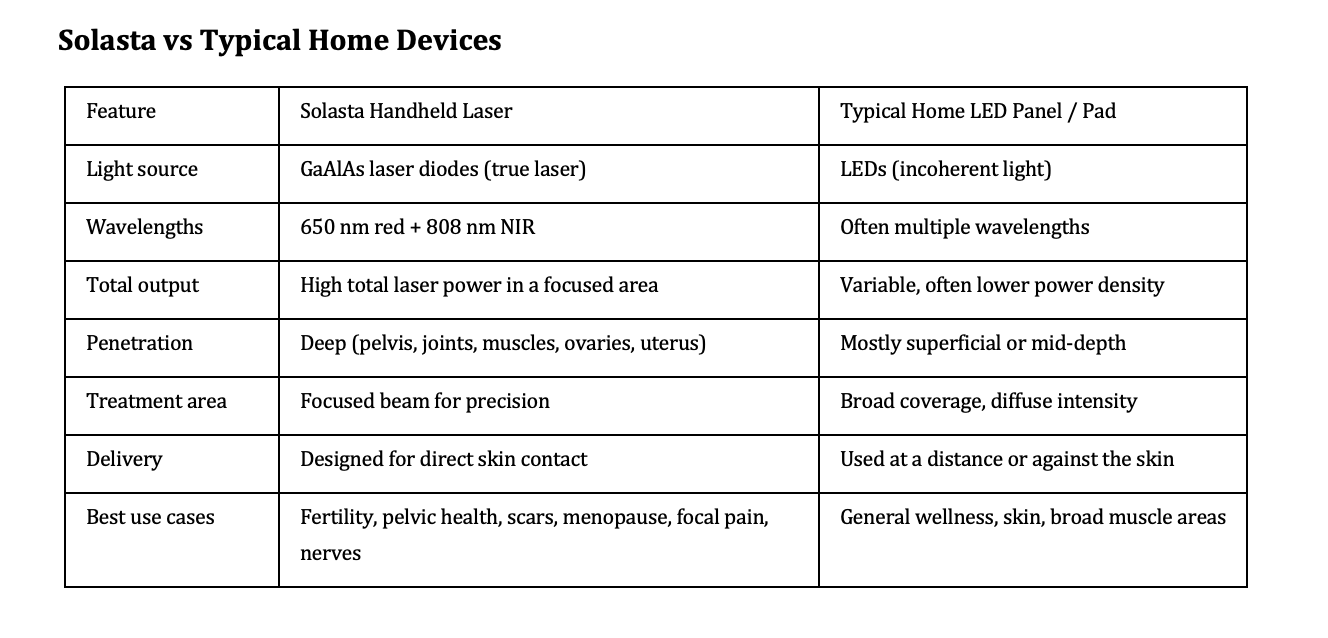
Comparison Chart
Why 808 nm Laser Is So Well‑Studied
Several factors make laser 808 nm a favorite in research labs and clinics:
It’s in the “optical window” where light passes efficiently through skin, fat, and soft tissue with relatively low absorption by melanin and water, giving it excellent penetration to deeper structures like joints, nerves, pelvic organs, and brain tissue.
It overlaps strongly with one of the main absorption peaks of mitochondrial chromophores, particularly cytochrome c oxidase, which is central to ATP production and redox signaling.
It has been used for decades in medical lasers, so there is a large legacy of dose‑response data in pain, musculoskeletal, and neurological conditions.
Because of this, 808 nm has become a “workhorse” wavelength in both animal and human PBM studies.
What the Research Shows at 808 nm
A few broad themes emerge from 808 nm studies:
Pain and inflammation: 808 nm diode lasers have been shown to reduce pro‑inflammatory cytokines and increase anti‑inflammatory mediators in models of arthritis, tendon injury, and post‑surgical pain, while improving functional outcomes.
Tissue regeneration: Studies report enhanced bone formation, faster tendon and muscle repair, and improved wound healing when 808 nm is dosed appropriately, supporting its use in orthopedic, dental, and post‑operative settings.
Brain and cognition: Transcranial PBM with 808 nm has been shown to modulate gene expression related to neuroprotection, neuroinflammation, oxidative stress, and neurogenesis, with animal and early human work suggesting benefits in cognitive performance and resilience against neurodegenerative processes.
Reproductive and systemic applications: 800 class NIR, including 808 nm, is used in fertility protocols and multi‑wavelength studies that report improvements in ovarian function, sperm motility, and systemic inflammatory markers, indicating that this wavelength is effective far beyond pain.
What ties these results together is not one single indication, but a consistent pattern: carefully dosed 808 nm light can shift mitochondrial output, inflammation, and microcirculation in ways that support repair across multiple systems.
Paired with 650 nm red for more superficial circulation and skin‑level effects, Solasta’s 808 nm NIR allows you to bring a research‑grade wavelength into daily, at‑home protocols aimed at deep structures like ovaries, uterus, joints, and brain‑adjacent tissues - while still staying within the safety profile established in the PBM literature.
Use in Pregnancy
Pregnancy is a time when most women want fewer medications, but more relief. Red Light Therapy can be a gentle, non‑drug option when used carefully.
Common pregnancy‑friendly applications include:
Lower back pain from postural and ligament changes.
Carpal Tunnel Syndrome (wrist pain).
Hip and pelvic girdle discomfort.
During pregnancy, conservative dosing is key: lower power, shorter sessions, and cautious site selection. Most importantly: Solasta should not be used directly over the pregnant uterus. The uterus is hormonally active and highly sensitive, and pregnancy is not the time for DIY experimentation - you may see pregnant influencers online, sitting in front of their panels but keep in mind most of the light is bouncing off the skin The goal in pregnancy is to support comfort, circulation, and nervous‑system regulation in safer zones, back, hips, neck, and peripheral joints while respecting clear boundaries around the uterus.
Portable Relief You Can Take Into Labor
Labor is intense, and many women feel contractions most strongly in the lower back and sacrum. Because Solasta is portable and cordless, it can be brought into labor (with your care team’s approval) as a non‑drug tool for back‑labor pain. I sometimes pair it with a TENS machine too for even more relief.
Practical uses in labor include:
· Direct placement over the sacrum or lower back between contractions.
· Use alongside counter‑pressure, massage, and TENS machines on hands‑and‑knees or leaning forward over a ball.
· Short, repeated sessions focused on the main pain area rather than whole‑body use.
The combination of targeted light, improved local circulation, and modulation of inflammatory signaling can integrate naturally with your existing comfort strategies, without adding sedation or systemic side effects (and yes we do have evidence that labor may be less painful and shorter).
Postpartum: Perineum, Wound Healing, Pelvic Floor and Exhausted Muscles
Postpartum recovery is a major repair project for your body, even while you’re caring for a newborn and figuring out breastfeeding.
Common postpartum uses with the Solasta Laser:
· Perineal tears or episiotomy (not in skin contact initially).
· Cesarean wound healing and scar remodeling.
· Pelvic floor soreness and pelvic pain.
· Neck, shoulders, and mid‑back strain from nursing and carrying baby
Solasta’s adjustable power and pulsed modes let you “turn down” intensity for delicate perineal or incision areas and “turn up” for large muscle groups like back and hips. Many new parents report more comfortable scars and less persistent tenderness when PBM becomes part of their postpartum routine.
Lactation: Engorgement, Nipple Pain, Blocked Ducts
Engorgement, nipple trauma, and blocked ducts can quickly push breastfeeding from “hard” to “impossible.” Our laser offers a non‑drug way to support breast tissue while you work on latch, positioning, and enjoying your baby.
With Solasta, low - to - medium settings and short sessions may be used over:
· Engorged breasts to support lymphatic drainage, circulation and soften fullness.
· Localized blocked ducts or early mastitis (alongside care from a trained breastfeeding expert such as an IBCLC).
· Cracked, painful nipples and areola to support repair.
Trials using 650 - 660 nm lasers for nipple trauma and 800+ nm NIR for engorgement have reported reduced pain and make it more likely you’ll continue to breastfeed more comfortably, which is part of the rationale for using Solasta’s wavelengths in lactation support.
Pain Relief: Everyday Aches to Chronic Issues
Solasta is also a serious tool for musculoskeletal pain. The 650/808 nm combo mirrors many clinically used PBM systems for:
· Neck and shoulder pain
· Low back pain and sciatica
· Knee osteoarthritis and hip pain
· Tendinitis, plantar fasciitis, and sports injuries
Clinical studies of red and NIR PBM have reported reductions in post‑operative pain, osteoarthritis discomfort, and spine‑related pain when used regularly for several weeks. Solasta’s focused beam makes it possible to deliver similar types of doses at home over small areas in 5 - 20 minute sessions.
Wound Healing and Scar Support
Photobiomodulation has a long track record in wound healing and scar modulation. With Solasta, those benefits can be applied at home to:
· Cesarean scars
· Perineal repairs
· Laparoscopy/hysteroscopy entry points
· Other surgical or injury‑related scars
Early on, light is applied around, not directly on open tissue and then progresses to direct scar work as healing advances. Red light therapy’s ability to support fibroblast activity, collagen organization, and balanced inflammatory responses makes it a logical tool in scar‑care routines (as well as reducing pain and swelling). Getting light on the wound as soon as possible accelerates the healing process.
Lymphatic Drainage and Swelling
Swelling after birth, surgery, or injury affects comfort, mobility, and healing speed. Red light therapy supports lymphatic function by:
· Improving local microcirculation.
· Modulating inflammatory mediators that promote fluid congestion (and pain).
· Supporting overall tissue metabolism.
Using Solasta in slow, sweeping passes along lymphatic routes (neck, axilla, groin, limb pathways), combined with manual lymph drainage, compression, and movement, can enhance the overall de‑swelling strategy.
Menopause, Brain Fog, and Mood
Menopause brings brain and body changes: brain fog, word‑finding difficulty, mood shifts, sleep disruption, and more aches are common themes. These symptoms are tied to changes in blood flow, inflammation, and mitochondrial function in neural tissue as estrogen declines.
Transcranial NIR PBM studies using 808–810 nm have shown:
· Improved neuron survival and reduced toxic protein effects in lab models
· Cognitive gains and better executive function in some human trials with dementia and mild cognitive impairment
· Good safety profiles in repeated, low‑intensity sessions
Solasta’s 808 nm wavelength aligns with this emerging brain research, which is why some practitioners cautiously incorporate cranial and cervical (neck) PBM for menopause‑related brain fog, mood, and sleep as part of a broader plan, always with strict attention to eye safety and dosing.
Fertility and Pelvic Health: Where Solasta Was Born
My search for a quality, affordable laser was born out of frustration with how vague and misleading most online information about red light therapy is, especially for women’s health. Many websites imply that standing in front of a pretty red panel for a few minutes a day will solve fertility, pelvic pain, or hormone problems, without ever talking about power, dosing, or depth. Women are left thinking “red light = good,” but never shown how to actually reach ovaries, uterus, scars, or deep pelvic structures in a therapeutic way. And when they don’t see any results they’re left thinking “red light = woo.”
Panels absolutely have a place, but they’re more like a good multivitamin: broad, gentle, and supportive for overall wellness. They can help with skin, general circulation, mood, and muscle recovery when used regularly. Targeted PBM with a device like Solasta is more like a prescribed dose of a specific nutrient for a specific deficiency, focused, measured, and aimed at a precise tissue with a clear therapeutic target. Effective low level laser protocols consider wavelength, power density, skin contact, treatment time, and frequency so the right dose reaches the right tissue consistently.
Your work with Solasta is anchored in specialist training rather than guesswork. That includes:
· Focused education in laser therapy for pelvic floor and pelvic pain.
· Dedicated training in laser use for lactation - engorgement, nipple trauma, and blocked ducts.
· Additional training in PBM for wound care and scar modulation.
· Laser‑based fertility training, including protocol development for complex infertility challenges.
· A postgraduate diploma from the University of Montpellier, currently the only university offering formal postgraduate education specifically the speciality of photobiomodulation.
I’m also a trained midwife with Masters‑level education with a laser clinic in Round Rock Texas. I’m the author of several published books, and an actively practicing birth doula who attends births regularly. That means the Solasta protocols I create are not theoretical; they are informed by real‑world use of different lasers for women’s health.
When someone buys a laser from me, you’re not just buying a device; you are stepping into the care of a practitioner who understands the entire journey - from preconception through birth, postpartum, and menopause - and who has literally held the laser at the bedside, not just in a brochure.
Using Solasta for Pets
Veterinary clinics routinely use low‑level lasers for animals with joint pain, soft‑tissue injuries, and post‑surgical wounds. Under veterinary guidance, Solasta can be used at appropriate settings to support:
· Arthritic hips, knees, and spine in dogs.
· Post‑operative incision sites.
· Chronic soft‑tissue strains or degenerative conditions.
Protocols for animals are usually shorter and lower‑power than for humans, and eye protection is critical for both the animal and owner.
Recent Science: Why These Wavelengths Matter
The red and NIR wavelengths used in Solasta (650 nm and 808 nm) sit in the same neighborhood as many PBM studies:
· Fertility: PBM in the 630 - 670 nm and 800 - 810 nm ranges has been shown to improve ovarian aging markers in animal models and has been associated with improved pregnancy outcomes in some human case series using multi‑wavelength protocols.
· Male fertility: Reviews and trials of low‑level laser therapy have noted improved sperm motility and viability.
· Lactation: Trials with red (650 - 660 nm) lasers for nipple trauma and regimens including NIR for engorgement and mastitis symptoms have shown reduced pain, improved healing, and breastfeeding continuation.
· Brain and cognition: Studies and reviews of transcranial PBM with 808 - 810 nm have described improved cognitive scores in dementia and mild cognitive impairment, as well as neuroprotective effects in laboratory models.
· Pain and surgery: PBM using similar red and NIR wavelengths has demonstrated reductions in post‑operative pain and edema and improved function in osteoarthritis and spine pain.
These data don’t make Solasta a “cure” for any condition, but they do explain why a home device built around 650/808 nm is a rational choice if you want to bring research‑grade wavelengths into everyday wellness routines.
How the FDA Sees Red Light Devices (and Why Language Matters)
In the U.S., most red‑light and low‑level laser devices are regulated as medical devices, often in lower‑risk classes, and cleared or registered for broad indications like temporary relief of minor muscle and joint pain, improvement of local blood circulation, and relaxation of muscles. They are not approved as drugs and are not licensed to diagnose, treat, cure, or prevent specific diseases such as infertility, endometriosis, depression, or Alzheimer’s.
That means:
· We can talk about mechanisms (how PBM supports cellular energy and inflammation).
· We can discuss general benefits such as comfort, mobility, and wellness support.
· We can reference emerging research and how it informs practice.
But we cannot promise that Solasta will “cure infertility,” “reverse menopause,” or “treat depression.” Those are regulated medical claims reserved for products with specific approvals.
The Solasta Laser is a wellness and supportive‑care tool: it supports your body’s own biology - energy production, blood flow, and inflammatory balance - alongside, not instead of, medical care.
How Solasta Fits Into a Complete Protocol
Solasta is powerful, but the real transformation comes from how it fits into your bigger plan.
In practice, that often means:
· Combining Solasta with a high‑output LED pad over abdomen or back for broad coverage.
· Adding a pelvic wand for internal/external PBM via vaginal mucosa (for ovarian support or pudendal neuralgia)
· Aligning PBM use with cycle phase, postpartum window, menopause symptoms, or pain flares.
· Supporting circadian rhythm, nutrition, movement, and stress regulation alongside light therapy.
This “stacked” approach mirrors how PBM is used in clinical settings: different tools for different depths and tissues, all working toward the same biological goals.
Stacking Devices: Laser, Pads, and Wands (learn more here)
· Laser + Pad (Fertility / Pelvic Pain)
Solasta directly over each ovary or focal pain site; LED pad over the lower abdomen or back to support circulation and muscles.
· Pad + Wand (Pelvic Floor / Uterine Lining)
Pad externally across the pelvis; internal pelvic wand delivering red/NIR closer to uterus and cervix through mucosal tissue.
· Full Stack (Comprehensive Fertility Protocol)
Pelvic wand internally, pad over abdomen or low back, Solasta over ovaries or scars, coordinated with follicular/luteal phases.
Each layer adds depth, coverage, or specificity - not just “more minutes” of the same thing.
Who Solasta Is (and Isn’t) For
Solasta is a good fit if you:
· Want a science‑informed, non‑drug tool for fertility support, pelvic pain, postpartum recovery, lactation issues, menopause, chronic pain, or general resilience.
· Are willing to use it consistently and follow a structured, evolving protocol.
· Value low‑EMF, non‑thermal, transparent specs over vague influencer promises.
Extra caution and personalized guidance are essential if you are pregnant, undergoing active cancer treatment, have significant systemic disease, or take strong photosensitizing medications—those situations deserve bespoke protocols and coordination with your medical team.
Safety, EMF, and Smart Use
Good PBM should be non‑thermal, transparent, and respectful of your biology.
With Solasta:
· Treatments are non‑invasive and generally painless at recommended settings.
· Proper eye protection is mandatory; never aim the beam at human or animal eyes.
· Dosing (time, frequency, power, placement) is matched to your goals - fertility, scars, lactation, menopause, pain—rather than copied from a generic one‑page sheet.
This is why cheap, overheating “red light gadgets” with vague specs and high EMF output are not in the same category as a device like Solasta.
Why Buy Your Solasta Laser From Me?
A powerful device without a protocol is just an expensive flashlight. When someone buys Solasta through me, you’re not just getting hardware - you’re getting a tailored plan shaped by current evidence and real‑world clinical practice.
You’ll Receive:
· In‑depth intake
A detailed questionnaire covering health history, diagnoses, medications, cycle patterns, treatments, symptoms, and goals - fertility, postpartum, lactation, menopause, pain.
· Personalized protocol
o Which days of the cycle (or week) to treat.
o Exact placement for each goal (ovaries, uterus, perineum, scars, joints, cranial sites).
o Power level, mode (continuous vs pulsed), and minutes per area.
o Adjustments for pregnancy, postpartum, menopause, and cycle timelines.
This turns Solasta from a device you own into a strategy you follow - and that is what makes purchasing through me genuinely different.
Tracy