Red Light Therapy and Perineal Tearing
For decades, the standard advice for recovering from a perineal tear or episiotomy has been "ice, NSAIDs, and hang on for dear life." But for many new moms, waiting isn't an option when pain levels sit at a 6 to 8 out of 10 during those critical first 72 hours.
Recent breakthroughs in Photobiomodulation (PBM) / Red Light Therapy - are transforming postpartum care. A recent landmark 2026 study has confirmed that adding 808nm laser therapy to standard protocols delivers measurable pain relief and accelerates tissue repair in just a few days.
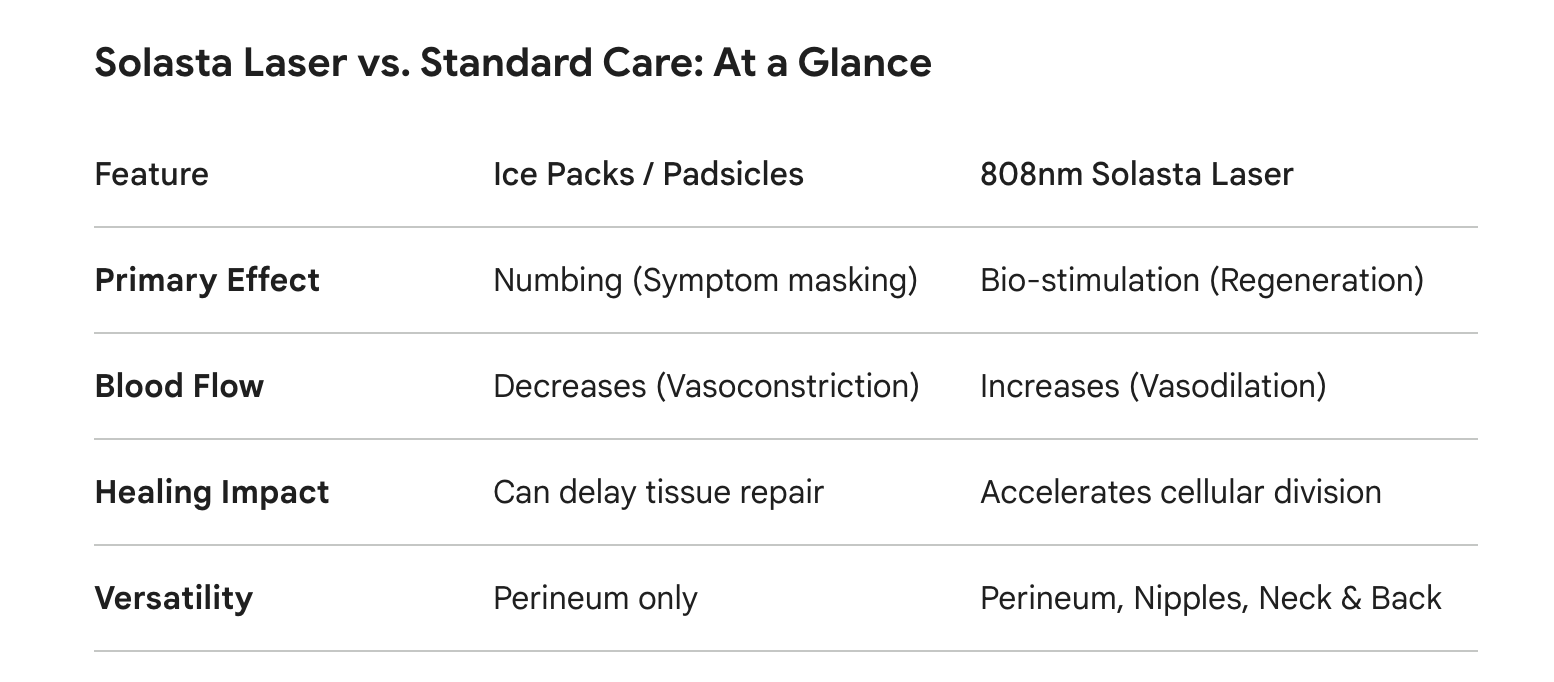
The "Padsicle" Paradox: Why Ice Can Slow Down Healing
For years, "padsicles" (frozen sanitary pads) have been the gold standard for postpartum comfort. While the numbing effect of ice feels like a relief in the moment, modern tissue science and the latest comparative research suggests that ice is a barrier to healing.
Ice Interrupts the "Healing Fire"
Healing is a four-stage process that must begin with inflammation. This "inflammatory fire" is how your body recruits the white blood cells and growth factors necessary to rebuild the perineum.
The Problem with Ice: Extreme cold causes vasoconstriction, which shuts down blood flow to the area. While this numbs the nerves, it effectively "pauses" the healing clock. If you keep the tissue frozen, you are delaying the transition from the inflammatory phase to the repair phase.
The Red Light Alternative: Unlike ice, 808nm light therapy modulates inflammation rather than stopping it. It allows the inflammatory cells to do their job while simultaneously increasing blood flow and cellular energy (ATP).
Expert Insight: It’s the difference between "numbing the pain" (Ice) and "removing the source of the pain" (Red Light). One makes you feel better for an hour; the other helps you heal in days.
Research Spotlight: The 2026 PBM Study on Perineal Healing and Red Light Therapy
A 2026 study conducted at a major Brazilian university hospital evaluated the impact of integrating PBM into routine care for 183 postpartum women with second- and third-degree lacerations.
Study Snapshot:
The Protocol: Participants received targeted 808nm laser therapy at 100 mW, applied to five perilesional points daily.
The Results: PBM was associated with a statistically significant reduction in pain scores (NPS) and a marked improvement in the REEDA scale (Redness, Edema, Ecchymosis, Discharge, and Approximation).
The Conclusion: 808nm light acts as a biological "fast-forward" button for cellular repair.
The Solasta Advantage: One Tool for Your Entire Recovery
While the study focused on perineal tears, the Solasta Home Laser is the superior choice because of its 808nm deep tissue wavelength and versatility. Postpartum recovery isn't just about one area; it’s a full-body transition.
1. Perineal/Episiotomy Repair
Using the exact wavelength from the Brazilian study, the Solasta reaches the deeper muscular structures of the perineal body, encouraging faster closure of tears and reducing the "throbbing" sensation.
2. Nipple Pain and Trauma
Breastfeeding can be tricky in those early days - as if a sore perineum wasn’t enough! PBM has been shown to assist in healing cracked or traumatized nipples by increasing ATP to repair the skin barrier, making the early days of nursing sustainable.
3. Back, Neck, and Shoulder Relief
Between the "postpartum slouch" and carrying a newborn, most moms experience musculoskeletal strain. The Solasta can be used on the upper back and shoulders to modulate inflammation and soothe aching muscles.
Frequently Asked Questions (FAQ)
Is the Solasta safe to use with stitches?
Yes. Red light therapy is a "cold" laser technology. It does not pull on or heat up stitches; instead, it provides the energy cells need to knit the tissue back together around the repair.
Can I use it for C-section scars?
Absolutely. The 808nm wavelength is ideal for deep tissue penetration, helping to manage inflammation around the abdominal incision and improve the quality of the resulting scar tissue.
How soon after birth can I start?
In clinical trials, PBM is often started within the first 24 hours. Getting light on the wound/incision as soon as possible kick starts the healing process and minimizes swelling quickly.
Still have more questions?
Email me anytime!
Tracy