The Number 1 Thyroid Test Most Fertility Clinics Aren't Running (And Why You Need It)
When you are trying to conceive, it is understandable to want reassurance that all the basics of your overall and reproductive health have been checked carefully. For many women, thyroid testing means one blood test: TSH. If it falls inside the laboratory range, the conversation often ends there (and the ranges can differ based on what kind of care you’re receiving ie IVF clinic Vs restorative care). There is a BIG difference…
But TSH is only one part of the thyroid story.
Your thyroid influences energy, metabolism, menstrual cycles, ovulation, and the body’s adaptation to pregnancy. A ‘normal’ TSH can be reassuring, but it cannot tell us everything about the thyroid hormones available to your body or whether the immune system is reacting to your thyroid. That is why, in a fertility setting, it can be worth asking whether a more complete thyroid baseline is appropriate. (In NeoFertility recommended optimal levels are TSH between 1.0 and 2.5 mIU/L)
This is not about making women anxious or turning every lab result into a problem. It is about having enough information to see the full picture about your health and the health of your pregnancy.
Why a TSH-only test can miss part of the picture
TSH is a messenger hormone made by the pituitary gland in the brain. It tells the thyroid how hard it needs to work. It is useful, but it is not a direct measurement of thyroid hormone action in the body.
A fuller thyroid assessment may include:
TSH: the signal from the brain to the thyroid.
Free T4: the main hormone produced by the thyroid.
Free T3: the active (signalling) thyroid hormone used by tissues throughout the body.
Anti-thyroid peroxidase antibodies (anti-TPO): immune markers directed at an enzyme involved in thyroid-hormone production.
Thyroglobulin antibodies (TgAb): immune markers directed at a protein the thyroid uses to make and store thyroid hormone.
NeoFertility includes these thyroid measures in our Day 2–5 blood work, rather than relying on TSH alone, with results always interpreted in the context of the individual woman, your symptoms, medication use, history, and laboratory reference ranges.
What are thyroid antibodies?
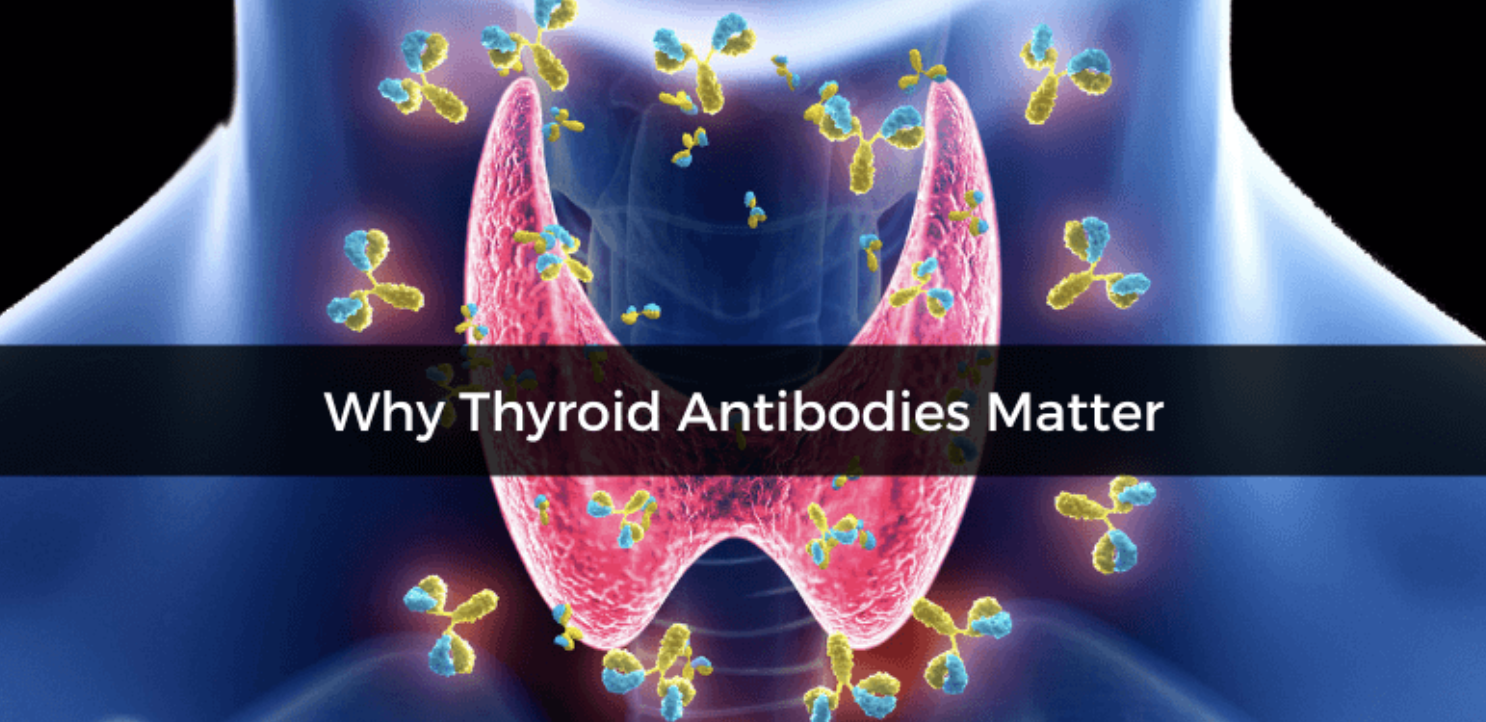
Thyroid antibodies are signs that the immune system is reacting to thyroid tissue. The two most commonly measured are anti-TPO antibodies and thyroglobulin antibodies.
A positive result can be associated with autoimmune thyroid disease, including Hashimoto’s thyroiditis. Importantly, a woman can have positive antibodies while her thyroid hormone levels and TSH are still within the laboratory reference range. That does not mean she is sick, infertile, or destined to develop thyroid disease. It simply gives your clinician useful context and may support more attentive follow-up before and during pregnancy.
Thyroid autoimmunity is not rare. A 2023 review estimated that it affects close to 10% of women of reproductive age. The same review found that thyroid autoimmunity may be more common in women with unexplained infertility and PCOS, and it described a well-established association between thyroid autoimmunity and pregnancy loss.
Still, association is not the same as proof of cause. Thyroid antibodies may be one piece of a larger autoimmune, hormonal, or reproductive picture; they should never be used to blame a woman for infertility or pregnancy loss.
Why this is debated around the world?
There is a genuine difference of opinion among professional groups about routine thyroid testing in fertility care.
In the United States, the American Society for Reproductive Medicine’s 2024 guidance does not recommend universal thyroid testing or thyroid-antibody screening for asymptomatic women attempting pregnancy, including those receiving fertility treatment. Instead, it supports targeted evaluation when symptoms, risk factors, or specific clinical circumstances raise concern. But with a restorative approach a full thryoid panel is routine - especially as 10% of women will have antibodies.
In Europe, the European Thyroid Association has taken a broader position for women seeking care for subfertility, recommending routine screening for thyroid disorders in this group.
Neither position means thyroid health is unimportant. The disagreement reflects an important evidence question: although thyroid antibodies are associated with pregnancy loss and may be more common in some women with infertility, researchers have not shown that treating every antibody-positive woman with normal thyroid function improves pregnancy outcomes (but I think I would want to know ahead of time to optimize my fertility).
In fact, randomized trials of levothyroxine in women with thyroid antibodies but normal thyroid function found similar live-birth outcomes in the treatment and placebo groups. Levothyroxine can be important for preventing or treating hypothyroidism when it is present, but it is not a universal fertility treatment for thyroid-antibody positivity alone.
Why a baseline can still be valuable
A full thyroid baseline is not about treating every number. It is about avoiding a missed opportunity to understand your health before pregnancy.
Testing may be especially worth discussing with a qualified clinician if you have:
Difficulty conceiving or unexplained infertility.
Recurrent miscarriage or previous pregnancy complications.
Irregular cycles or ovulatory concerns.
Fatigue, cold intolerance, hair loss, palpitations, tremor, heat intolerance, or unexplained weight change.
A personal or family history of thyroid disease.
Another autoimmune condition.
PMOS, endometriosis, or concerns about ovarian reserve.
A baseline provides something very practical: a point of comparison. If symptoms arise, pregnancy occurs, or thyroid levels shift later, there is already a clearer sense of where you started.
The NeoFertility approach
NeoFertility takes a restorative approach to fertility. Rather than accepting “unexplained” as the final answer, it looks for factors that may be affecting reproductive function in both partners.
Thyroid assessment is one part of a wider evaluation that may include cycle charting, confirmation of ovulation, hormone testing, nutrient status, reproductive anatomy, sperm health, and other possible contributors to infertility or miscarriage.
The purpose is not to chase antibody numbers or promise that a single treatment will resolve every fertility concern. It is to identify meaningful findings, clarify what they might mean, and create a thoughtful plan with appropriate medical support.
Have you had a FULL thyroid panel?
Learn more about red light therapy for thyroid health.
What if TSH is low and antibodies are positive?
A low TSH should be assessed carefully. It does not necessarily mean a woman has “low thyroid,” and it is not the classic pattern of uncomplicated Hashimoto’s-related hypothyroidism.
Low TSH can occur when thyroid hormone levels are too high, when the dose of thyroid medication is excessive, during some forms of temporary thyroid inflammation, with non-thyroid illness, or in hyperthyroidism such as Graves’ disease.
For a woman who is TTC, a restorative response begins with clarification - not self-treatment.
Your clinician may consider:
Repeating TSH, free T4, and free T3.
Reviewing all medications and supplements, including biotin, which can interfere with some thyroid blood tests.
Reviewing symptoms such as racing heart, tremor, anxiety, heat intolerance, unexplained weight loss, or eye changes.
Adding Graves’-specific antibodies, such as TRAb or TSI, when clinically indicated.
Considering imaging or endocrinology input where the diagnosis is uncertain or hyperthyroidism is suspected.
If Graves’ disease is present, specialist-led management before and during pregnancy is important. TSH-receptor antibodies can cross the placenta, which is one reason pregnancy monitoring needs to be individualized.
Thyroid antibodies, pregnancy, and postpartum: why knowing your status matters
If you’re planning a pregnancy - or you’ve recently welcomed a baby - thyroid antibodies deserve a different kind of attention.
Not because a positive result means something will go wrong. It doesn’t. But because it can help your care team recognize who may need closer thyroid monitoring.
Thyroid peroxidase antibodies, often called TPO antibodies, are a marker of an immune response involving the thyroid. You can have these antibodies even when your thyroid hormone levels are normal. During pregnancy, however, the thyroid has to meet increased hormone demands, and some antibody-positive women develop an underactive thyroid.
A positive antibody result is a reason to monitor - not a reason to panic
One study followed 940 women with positive TPO antibodies and initially normal thyroid function. About 7.4% developed subclinical or overt hypothyroidism before or during pregnancy. Most of those cases developed before conception, which highlights the value of assessing thyroid function while preparing for pregnancy - not only after a positive pregnancy test.
“Subclinical hypothyroidism” means TSH is elevated while free T4 remains within the reference range. Whether treatment is appropriate depends on the blood-test results, antibody status, and your individual clinical circumstances and reproductive history.
Which tests should be repeated during pregnancy?
Here’s an important distinction: the test commonly repeated during pregnancy is TSH - not the antibody level.
For women who are TPO-antibody positive, American Thyroid Association guidance recommends checking TSH when pregnancy is confirmed, approximately every four weeks through midpregnancy, and at least once near 30 weeks. Your clinician may tailor that schedule, particularly if medication is started or adjusted.
The purpose is to catch changes in thyroid function early and maintain an appropriate supply of thyroid hormone.
Why maternal thyroid hormone matters to the baby
During early pregnancy, a developing baby relies on thyroid hormone supplied by the mother. The baby’s thyroid develops gradually and begins contributing its own hormones as pregnancy progresses. Maternal thyroid hormone is especially important during early brain and nervous-system development.
This is why identifying and treating maternal thyroid dysfunction matters. The goal is not simply to lower an antibody number - it is to support appropriate thyroid hormone levels for both mother and baby.
The need for follow-up continues after birth
Positive TPO antibodies also increase the risk of postpartum thyroiditis, an inflammation of the thyroid that can occur during the first year after pregnancy. It may cause a period of overactive thyroid function, underactive function, or both in sequence.
Symptoms can be easy to overlook during postpartum recovery. The American Thyroid Association describes symptoms such as anxiety, difficulty sleeping, palpitations, fatigue, depression, constipation, and reduced exercise tolerance. These symptoms deserve attention rather than automatically being attributed to the demands of caring for a newborn.
For women known to be TPO-antibody positive, a postpartum plan may include TSH testing at three and six months after delivery, with earlier assessment if symptoms develop. Women already taking thyroid medication may also need a six-week postpartum check after dose adjustments.
Most importantly, a positive antibody test is information - not a verdict. It can help you and your care team plan ahead, recognize changes sooner, and avoid missing a treatable thyroid problem.
Emerging Support for Thyroid Health - Low Level Laser (Red Light Therapy)
Emerging research has also explored whether photobiomodulation (PBM), or low-level laser therapy, affects these antibodies. A 2025 study involving 97 women who completed 12 months of follow-up found that median anti-TPO levels fell from 353 to 88 IU/mL and anti-thyroglobulin antibodies fell from 294.6 to 40 IU/mL in participants receiving laser therapy plus supplements. Antibody changes over time differed significantly from those in the supplements-only group. However, the study was nonrandomized. Read more about combining your red light therapy protocol with a thyroid protocol while you’re TTC (see the ultrasound images before and after red light therapy).
Several studies have explored whether photobiomodulation (PBM), or low-level laser therapy, can reduce thyroid antibodies. Höfling and colleagues’ 2010 pilot study of 15 patients reported an approximately 41% reduction in mean anti-TPO levels, and their subsequent randomized, placebo-controlled trial, published in 2013, found significantly lower anti-TPO levels in the laser-treated group than in the placebo group. Ercetin and colleagues’ 2020 nonrandomized study of 350 patients also reported reductions in anti-TPO with PBM plus supplements compared with supplements alone. These findings are promising, but several studies were nonrandomized. (Read the surprising finding in Höfling’s six-year follow-up)
A positive thyroid-antibody test is not a verdict on your fertility. It does not mean you caused your fertility struggles, and it does not automatically mean you need medication.
But it can be useful information.
A more complete thyroid assessment can help you and your clinician understand whether there is a possible contributor worth monitoring or addressing before pregnancy. The goal is not fear. The goal is clarity, thoughtful care, and the confidence that your thyroid health has been considered as part of the bigger fertility picture.
Tracy
https://www.sciencedirect.com/science/article/abs/pii/S2213858719301536
https://journals.sagepub.com/doi/10.1089/thy.2016.0457?
https://www.nejm.org/doi/full/10.1056/NEJMoa1812537
This article is for education and is not personal medical advice. Please discuss thyroid testing, symptoms, and treatment decisions with a qualified healthcare professional.
Berisha-Muharremi V, Tahirbegolli B, Phypers R, Hanna R. Evaluation of Thyroid Volume Normalisation in Female Patients with Hashimoto Thyroiditis: A 12-Month Comparative Study of Combined Supplements and Photobiomodulation Versus Supplementation Alone. Biomedicines. 2025;13(7):1555. doi:10.3390/biomedicines13071555.
Ercetin C, Sahbaz NA, Acar S, Tutal F, Erbil Y. Impact of photobiomodulation on T3/T4 ratio and quality of life in Hashimoto thyroiditis. Photobiomodulation, Photomedicine, and Laser Surgery. 2020;38:409–412.
Höfling DB, et al. Low-level laser therapy in chronic autoimmune thyroiditis: a pilot study. Lasers in Surgery and Medicine. 2010;42:589–596.pubmed.ncbi.nlm.nih
Höfling DB, et al. Low-level laser in the treatment of patients with hypothyroidism induced by chronic autoimmune thyroiditis: a randomized, placebo-controlled clinical trial. Lasers in Medical Science. 2013;28:743–753.pubmed.ncbi.nlm.nih