Does Red Light Therapy Shrink Fibroids? What the Science Actually Says
I want you to know something that took me a while to fully grasp as a midwife: the most powerful tool for protecting your uterus from fibroids may not be in your supplement cabinet, your specialist’s office, or even on your plate.
It’s the sun on your skin in the morning. It’s the darkness of your bedroom at night. And it’s something that more than 6 out of every 10 American women are accidentally cutting themselves off from.
In a nutshell - here’s how red light therapy can impact fibroid growth:
What it does: Lowers pelvic inflammation and breaks down the hardened extracellular matrix (the "scaffolding" of the fibroid).
What it doesn’t do: It isn't a magical overnight cure, but a 90-day protocol helps stop the cycle of growth.
What you need: Targeted, high-irradiance devices that allow direct skin contact (rather than distant panels or LEDs).
If you’ve been told you have fibroids, or you’re in the thick of heavy periods, pelvic pain, fertility worries, or that creeping fatigue that no one quite explains, I want you to take a slow breath. We’re going to walk through this together, with real science and real next steps.
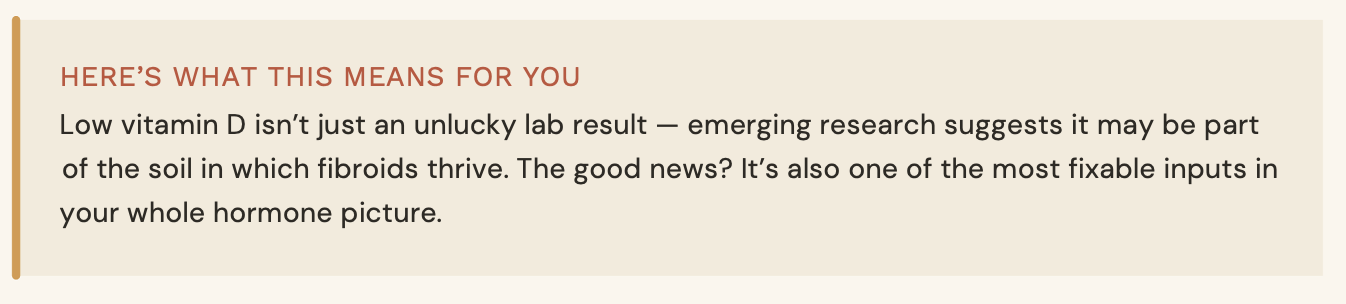
Let’s start with the chronic suboptimal Vitamin D levels that most women don’t know about.
Wait - what does the sun have to do with my fibroids?
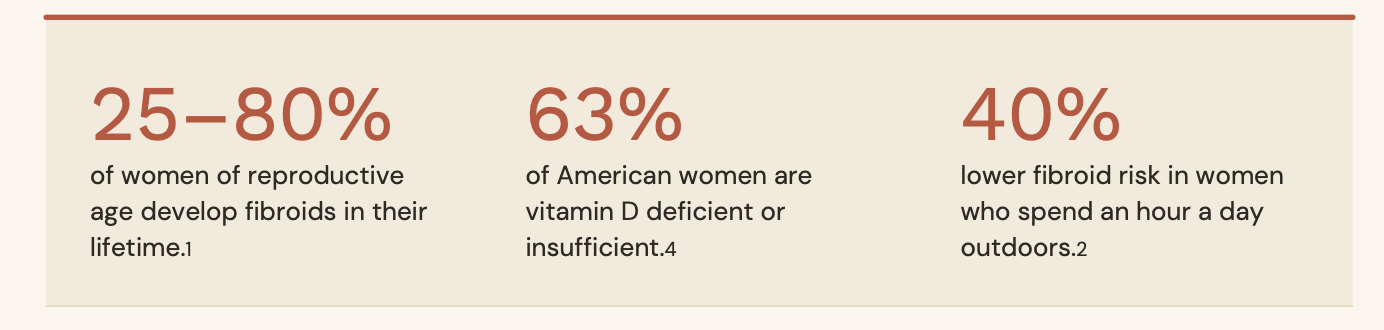
Here’s the lightbulb moment (pun absolutely intended). Uterine fibroids, those benign-but-bossy muscle tumors that affect anywhere from 25 to 80 percent of women of reproductive age, are profoundly influenced by one specific hormone you probably think of as a “vitamin.”
Vitamin D isn’t really a vitamin at all. It’s a steroid hormone your body manufactures when ultraviolet B light (295–315 nm) hits the cholesterol in your skin. That sunlight kicks off a chain reaction that produces active vitamin D, a molecule that talks directly to the cells inside your uterus.
And when researchers looked at women with fibroids versus women without, they found something striking: women with fibroids have significantly lower levels of free vitamin D and higher levels of the protein that locks vitamin D away from your cells (called VDBP). In other words, their bodies are not just low, they’re actively struggling to get vitamin D where it needs to go.
The shocking truth about vitamin D in American women
If you’re sitting there thinking, “Well, I take a multivitamin, I’m probably fine,” I gently want to challenge you. The latest NHANES analysis (the gold-standard U.S. nutrition study) looked at vitamin D levels in American women across 2001 - 2018, and the picture is concerning.
Only 36.6% of U.S. women have sufficient vitamin D. The rest fall into three categories of inadequate.
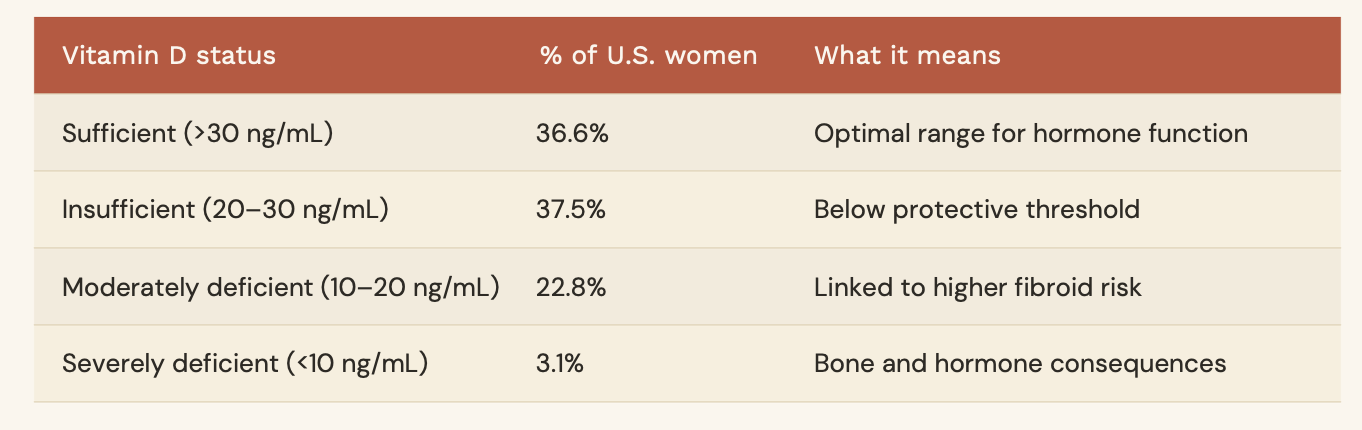
There is debate between Vitamin D ‘experts’ if the minimum levels recommended are in fact already too low some independent experts suggest that 40 - 60 ng/mL is the minimum level. The 20 ng/mL IOM threshold was designed for bone health in a general population — it was never intended to represent optimal levels for reproductive tissue, immune function, or fibroid protection. The fibroid-specific research strongly implies the protective range is >30 ng/mL at minimum, with many researchers and clinicians targeting 40–60 ng/mL as genuinely optimal.
Add those bottom three rows together: more than 63% of American women are walking around vitamin-D deficient or insufficient. And the University of Miami’s 2025 review confirmed it: nearly two-thirds of Americans are short on D, and women are at “higher risk” than men.
For women in their peak fibroid years (ages 30 - 49), moderate deficiency rates hover around 25%. And in winter, severe deficiency doubles compared to summer (daylight exposure matters!).
“More than 6 in 10 American women are deficient in the very hormone their uterus uses to keep fibroids in check.
”
Why fibroids LOVE vitamin D deficiency (and actively steal it)
Okay, here’s where it gets a little wild, and kind of fascinating. Fibroids don’t just sit there passively in a low-vitamin-D environment. They actively create one.
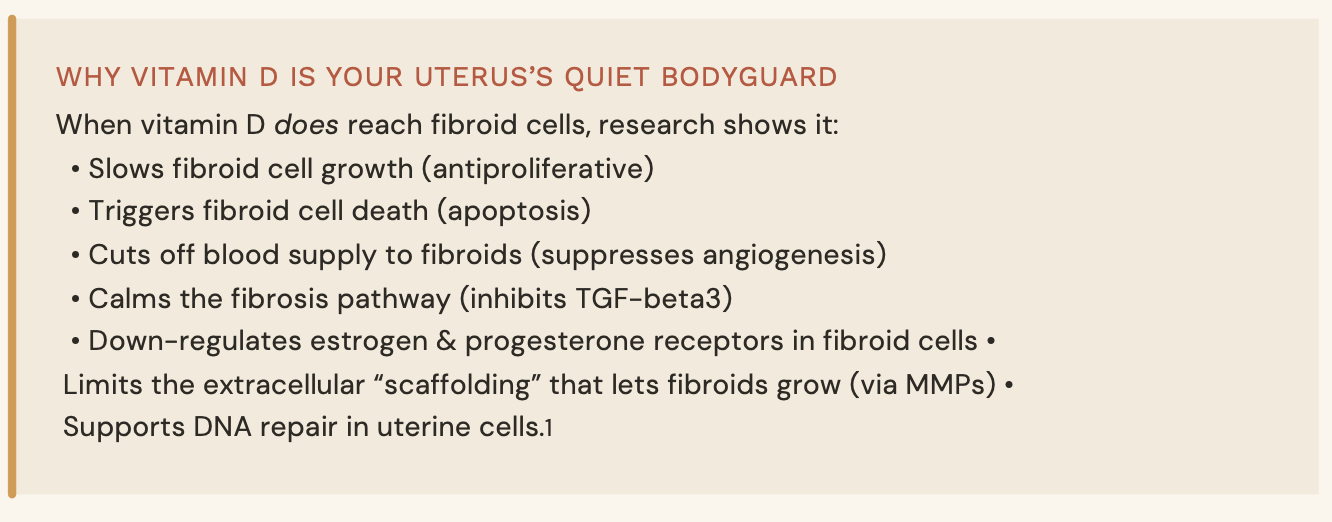
When researchers compared fibroid tissue to healthy uterine muscle, they found that fibroids dramatically upregulate an enzyme called CYP24A1 (the 24-hydroxylase). That enzyme’s entire job is to break down active vitamin D. At the same time, fibroid tissue has fewer vitamin D receptors than the healthy uterus around it, so even the vitamin D that survives has fewer places to dock and do its work.
In plain language? Fibroids literally starve themselves of the hormone that would slow them down. It’s a brilliant survival strategy on their part, and a hugely important clue for us.
Getting outdoors is literally medicine for your fibroids
I love this study because it’s so simple, so beautiful, and so usable in real life. Back in 2013, NIEHS researchers (Baird and colleagues) followed 1,036 premenopausal women, ages 35 to 49, and asked them about their habits, their sun exposure, and their fibroid status. What they found is fascinating.
Women who spent at least one hour a day outdoors had a 40% reduction in the odds of having fibroids.The protective effect was even stronger for large fibroids ≥4 cm. And critically, it held true in both black and white women.
Even more striking: for every 10 ng/mL bump in 25(OH)D levels, women had 20% lower adjusted odds of having fibroids. That’s the kind of dose-response relationship researchers dream about.
Your phone screen at night is sabotaging your fibroid defense
Here’s the part I really, really want you to hear. Sunlight in the morning is only half the story. Darkness at night is the other half. And our modern lives have made it almost impossible to get either one well.
When you get bright light into your eyes in the morning, your brain sets a 24-hour timer that says, “In about 14 hours, start making melatonin.” Melatonin is generally thought of as the hormone of the night but it does so much more than help you sleep.
A landmark 2020 paper in the Journal of Pineal Research showed that melatonin selectively kills fibroid cells through both apoptosis and autophagy, while only mildly pausing the growth of healthy uterine muscle. It works through MT1/MT2 receptors and downregulates the Akt–ERK1/2–NF-kB signaling pathway, reducing the very extracellular matrix that lets fibroids grow large and stubborn.
Now here’s the gut-punch: blue light from screens and overhead LEDs at night suppresses melatonin. Recent research from the University of New Mexico (Harding, 2025) highlights that blue wavelengths are particularly harmful for circadian disruption, and night shift work - which exposes women to bright artificial light during their biological night - is associated with disrupted sex steroid hormones and lower melatonin. If you’ve worked with me before you’ll know how much I focus on your light ‘diet’. It’s just as important as nutrition.
The benchmarks researchers point to are surprisingly strict: under 10 lux of light in the evening, and under 1 lux in your sleep environment. For reference, a single overhead kitchen light is hundreds of lux. Your phone, held inches from your face, is even more.
What the clinical trials actually show
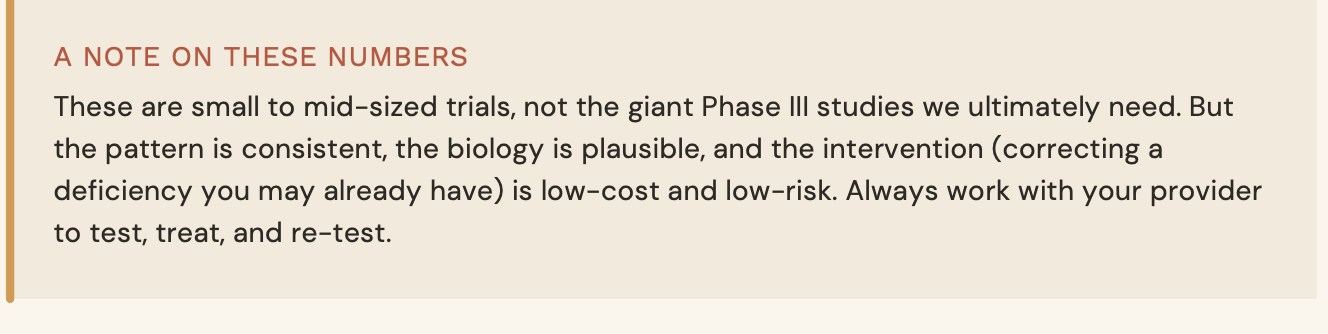
I know what you might be thinking: “Tracy, this all sounds great, but does giving women vitamin D actually shrink fibroids?” It’s the right question. Here’s what the human trials are showing us so far:
Hajhashemi et al. (2021)
69 women with vitamin D deficiency. The group given 50,000 IU vitamin D every 2 weeks for 10 weeks saw fibroids shrink by 7.14 mm, while the placebo group saw no significant change.
Davari Tanha et al.
220 premenopausal women. Over 8 weeks the vitamin D group’s fibroids decreased by 0.48 mm, while the placebo group’s fibroids grew by 5.83 mm.
Vahdat et al. (2022)
Women given 1,000 IU vitamin D daily for 12 months after myomectomy had a 50% lower recurrence rate, and when fibroids did come back, they were significantly smaller.
Suneja et al. (2021)
30 women. Vitamin D supplementation reduced menstrual blood loss by 29.9%, dysmenorrhea by 44.1%, pelvic pain by 35%, and backache by 50%.
Combination therapy pilots
Multiple pilot trials of 300 mg EGCG (from green tea) + 50 mcg vitamin D + 10 mg vitamin B6 over 3 - 4 months showed significant fibroid shrinkage with no adverse effects.
Going deeper: can a red light therapy laser do what sunlight started?
Here’s where this story gets even more interesting, and where my work as a NeoFertility and photobiomodulation consultant intersects with everything we’ve talked about. Sunlight gives us vitamin D through UVB. Darkness gives us melatonin. But there’s a third way that specific wavelengths of light interact with your uterine tissue: photobiomodulation (PBM), also called red light therapy or low-level laser therapy (LLLT).
PBM uses targeted red and near-infrared light - wavelengths your body has been responding to since long before we invented screens, to speak directly to the mitochondria in your cells. It doesn’t replace sunlight or sleep. Think of it as a clinical-grade amplifier for the same light-biology your body already runs on.
How PBM works at the cellular level
The primary target of PBM is cytochrome c oxidase (CCO) - a protein inside the mitochondrial electron transport chain that absorbs red and near-infrared photons. When CCO absorbs this light, a cascade begins:
How I use the Solasta home laser in my practice and protocols
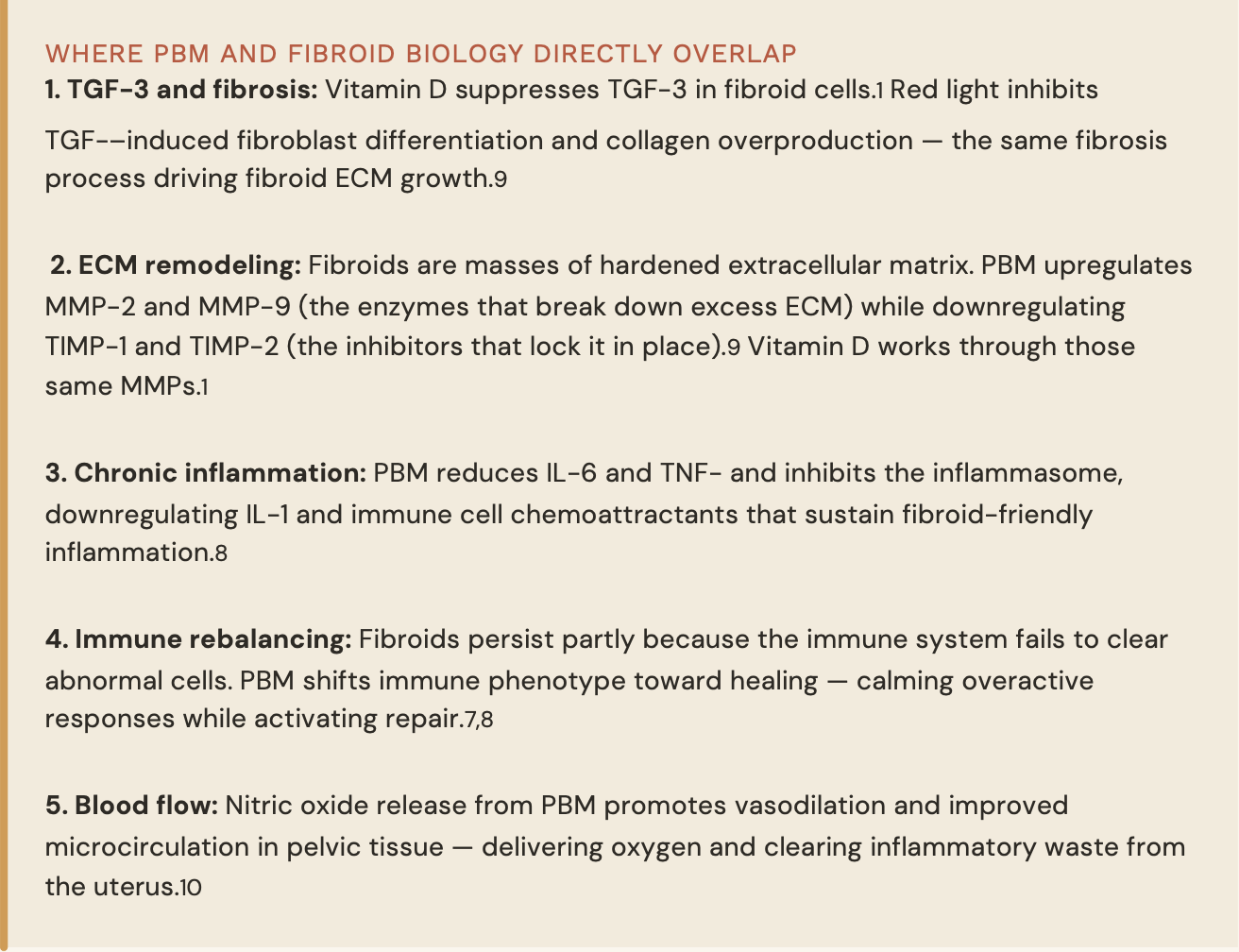
In my women’s health protocols, I use the Solasta laser a Class 3B clinical-grade device delivering 650 nm red light and 808 nm near-infrared light. These wavelengths sit precisely in the optical window where light passes through tissue with minimal absorption, reaching deep pelvic structures including the uterus, ovaries, and lymphatic tissue.
The 808 nm wavelength specifically overlaps with the absorption peak of cytochrome c oxidase - the same mitochondrial target identified in the foundational PBM mechanism research. At therapeutic, non-thermal settings, it works on the same pathways this entire blog has been building toward: anti-inflammatory, anti-fibrotic, pro-circulation, and pro-repair.
My approach combines NeoFertility, red light therapy with personalized vitamin D optimization, circadian rhythm support, and nutritional protocols, because all three pathways work on overlapping biology. Sun in the morning. Darkness at night. Targeted laser light to the tissue that needs it most. Not one magic bullet - an evidence informed coherent strategy.
What PBM Can and Cannot Do for Fibroids
I want to be really honest with you here, because I think you deserve a practitioner who sets realistic expectations rather than overselling a solution.
Photobiomodulation is not a surgical tool. It will not shrink a fibroid the way a myomectomy removes it or the way uterine artery embolization cuts off its blood supply. If anyone is promising you that red light will dissolve your fibroids, that's a claim the current research simply doesn't support.
What PBM can do, based on the mechanistic evidence is work upstream. It targets the biological conditions that allow fibroids to grow and persist: the chronic inflammation, the hardened extracellular matrix, the impaired local immune response, the poor pelvic circulation. Think of it less like a demolition crew and more like changing the soil so the weeds struggle to thrive.
This means results are measured differently, and more slowly. Women using red light therapy for fibroids as part of a broader protocol may notice reduced pelvic pain and less severe periods before they notice any change in fibroid size. Symptom relief can begin within weeks, but structural changes, if they occur are typically seen over 3 to 6 months of consistent use. Consistency is everything here; this is not a one-session fix.
A few things to keep in mind:
Tell your provider. Red light therapy is safe and non-invasive, but your OB or gynecologist should know you're using it so they can track changes accurately and adjust any monitoring accordingly.
Keep your imaging appointments. Ultrasound at baseline and at 3 - 6 months is the only way to objectively assess whether fibroid volume is stable, reduced, or growing.
Track your symptoms. Pain scores, menstrual blood loss, and quality of life are meaningful outcomes - don't wait for a scan to tell you whether something is working.
Red light therapy is one part of a strategy. The women most likely to see meaningful benefit are those also optimizing vitamin D, supporting circadian rhythms, reducing inflammatory load, and working with a practitioner on the full picture.
Laser vs. LED for Deep Tissue Fibroid Care
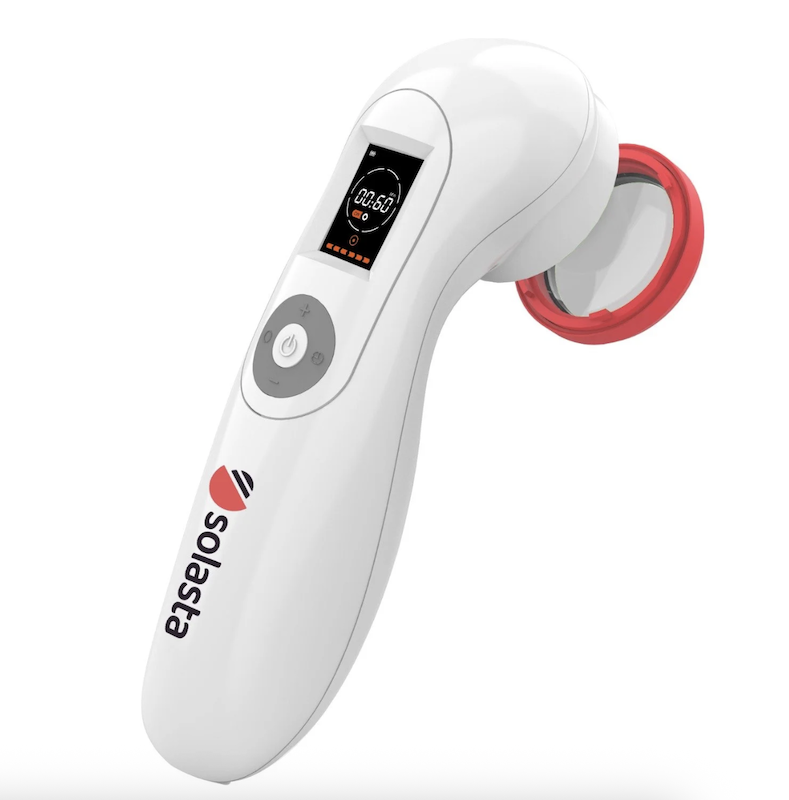
LEDs are excellent for surface-level symptom relief (cramps and heavy bleeding), deeper, larger fibroids often respond better to deep tissue laser penetration via therapeutic wavelengths and high irradiance.
A note for women of color
African American women carry an outsized share of the fibroid burden in this country: 60% by age 35, and more than 80% by age 50. And not coincidentally, the data show that non-Hispanic Black women have roughly 10x higher rates of vitamin D deficiency than other groups, with 60.4% deficient on NHANES.
Higher melanin is beautiful and protective in many ways, but it does mean your skin needs more UVB time to make the same amount of vitamin D. That isn’t a flaw. It’s a feature of a body designed for the latitudes our ancestors lived at. In modern indoor life, it just means we have to be more intentional about getting safe sunlight without sunscreen.
Download the free D-Minder app for safe sun access.
Tracy
Resources
Best red light devices for fertility and women’s health
1. Ciebiera M, et al. The Role of Vitamin D in Uterine Fibroid Biology and Therapy. Endocrine Reviews, 47(3):329 (2026). academic.oup.com/edrv/article/47/3/329/8456362
2. Baird DD, et al. Vitamin D and the risk of uterine fibroids. NIEHS / Epidemiology (2013). PMC5330388. pmc.ncbi.nlm.nih.gov/articles/PMC5330388
3. Lin P-H, et al. Melatonin activates cell death programs for the suppression of uterine leiomyoma cell proliferation. Journal of Pineal Research (2020). PMID 31710386. pubmed.ncbi.nlm.nih.gov/31710386
4. Cui A, et al. Prevalence, trend, and predictor analyses of vitamin D deficiency in the US population, 2001–2018. Frontiers in Nutrition (2022). PMC9573946. pmc.ncbi.nlm.nih.gov/articles/PMC9573946
5. University of Miami Health News. Why Are So Many Americans Deficient in Vitamin D? (2025). news.miami.edu/stories/2025/10/why-are-so-many-americans-deficient-in-vitamin-d.html
6. Brighter Days, Darker Nights. Uterine Fibroids and Anemia: the circadian link. (2026). brighterdaysdarkernights.com/p/uterine-fibroids-and-anemia
7. Hamblin MR. Mechanisms and applications of the anti-inflammatory effects of photobiomodulation. AIMS Biophysics (2017). PMC5523874. pmc.ncbi.nlm.nih.gov/articles/PMC5523874
8. Hennessy M, Hamblin MR. The anti-inflammatory effects of photobiomodulation are mediated by cytokines. Frontiers in Neuroscience (2023). frontiersin.org/journals/neuroscience/articles/10.3389/fnins.2023.1150156
9. Jagdeo J, et al. Visible red light emitting diode photobiomodulation for skin fibrosis. PMC4848333 (2016). pmc.ncbi.nlm.nih.gov/articles/PMC4848333
10. Bader A, et al. The rationale for photobiomodulation therapy of vaginal tissue for treatment of genitourinary syndrome of menopause. PMC6648197 (2019). pmc.ncbi.nlm.nih.gov/articles/PMC6648197
11. Semikhodskii A, et al. The efficacy of multiwavelength red and near-infrared transdermal photobiomodulation in enhancing female fertility outcomes. PMC11642705 (2024). pmc.ncbi.nlm.nih.gov/articles/PMC11642705
12. Mehraban S, et al. Low-level laser therapy for improvement of IVF outcomes in women with recurrent implantation failure. PMC11266823 (2024). pmc.ncbi.nlm.nih.gov/articles/PMC11266823