Why Didn’t My Embryo Stick? Can Red Light Therapy Help?
You've done everything right. The embryo is euploid and looking great, you're eating supplements like they are going out of fashion and yet this cycle failed… again. This is one of the most frustrating and most heartbreaking experiences to face, and when it keeps happening, it makes this journey so much more difficult. Maybe you’ve been trying to conceive naturally and you keep seeing those whisper faint lines on the pregnancy test but your period arrives a week late…again…and again. There is hope - if you know where to look.
So why does this happen? Why do even the healthiest, most perfect looking embryos fail to implant, again and again? Or maybe your cycles are like clockwork and everything seems fine.
What can you do to stack the odds in your favor of implantation happening as it should? Let’s take a look.
Compare popular red light devices for women’s health.
Implantation: A Perfectly Timed Dance
For healthy implantation to occur, multiple factors need to align perfectly. Honestly, the more I learn about this part of the process the more amazed I am that the human race has survived. Implantation is more than just the embryo finding that sweet spot to settle; it's a dynamic and highly coordinated interaction between the embryo and the endometrium (the lining of the uterus). The embryo and the endometrium must "communicate" with each other to find the perfect spot to implant. This involves chemical signaling and cellular interactions to ensure the embryo attaches securely. If this communication doesn’t happen, implantation doesn’t happen. Think of it like the essential communication between air traffic control (endometrium) and airplane pilot (embryo) as they prepare for a safe, smooth landing on the correct runway - in the dark - with turbulence (did you know the uterus contracts to help move the embryo to the right place (that’s the turbulence). Are you starting to get a better understanding of how intricate and perfectly timed this process needs to be? Isn’t it wonderful that we’re not responsible for making all of these well timed changes happen ourselves?
The Stages of Implantation
It’s a perfectly choreographed dance between the embryo and the uterus, happening in three important stages: opposition, adhesion, and decidualization. During opposition, the embryo and uterine lining "meet" for the first time, positioning themselves for a potential connection. Next comes adhesion, where the embryo begins to attach itself to the uterine lining, like velcro slowly sticking together, ensuring a firm grip. Finally, decidualization (invasion) is when the uterine lining transforms to fully support the embryo, providing nutrients and creating a nurturing environment for its growth. Each stage is crucial, and when they align perfectly, it sets the stage for a healthy pregnancy.
Here's what needs to happen:
A Receptive Endometrium: The uterine lining must be thick (at least 8mm) well-nourished, and receptive to the embryo. Most of my clients will have a uterine lining of at least 10mm usually more. This is often referred to as the "implantation window," which lasts just a few days during the menstrual cycle. Timing is essential, the uterine lining must be "in sync" with the embryo's development. Even slight mismatches can lead to the embryo landing in an area of the uterus that isn't optimal (like the plane landing on a closed runway - or worse, in a field). In a newly published 2025 study that timing can be off. 70% of women with PCOS/PMOS tend to have endometrial tissue that is ready to dance too early for the embryo. In women with unexplained infertility - 66% had the same problem. It’s also increased in women with DOR and older women and women with endometriosis or uterine inflammation. This mismatching of timing also significantly increases miscarriage in older women - even with donor eggs.
Adequate Blood Flow: Adequate blood flow to the uterus ensures the delivery of oxygen and nutrients to the endometrial lining, creating a supportive environment for your embryo to thrive. If your body is inflamed the organs aren’t receiving an optimal supply of blood flow and oxygen.
Immune Balance: Your immune system must be 'friendly' and cooperative. If it gets overactive (as seen in autoimmune conditions or elevated Natural Killer (NK) cell activity), it can mistake the embryo for an invader and won't allow implantation to occur.
Inflammation: Chronic low-grade inflammation in the uterus or the body as a whole can create an inhospitable environment, even for a healthy embryo.
Hormonal Harmony: Adequate levels of estrogen and progesterone are essential.
Even if all these factors are theoretically in place, implantation remains a delicate process. It’s not just about the embryo being healthy, the environment it lands in must be just as optimal.
Understanding these factors highlights why implantation is not as straightforward as it might seem, even when everything on paper looks perfect.

How Red Light Therapy Can Support Implantation
Red light therapy is emerging as a promising tool to support implantation and egg quality. Here's how it can help:
1. Improves Blood Flow to the Uterus
Red light therapy enhances microcirculation, ensuring that the uterine lining receives adequate oxygen and nutrients. Better blood flow creates a healthier environment for the embryo to implant and thrive.
2. Reduces Inflammation
By reducing pro-inflammatory markers and promoting a balanced immune response, laser therapy can help calm an overactive immune system. This is particularly beneficial for individuals with conditions like endometriosis, PCOS, or autoimmune-related infertility. There are several important molecules in each stage of implantation, such as cytokines, i.e., LIF LIF stands for Leukemia Inhibitory Factor - part of the IL-6 family, MUC-1 and IL-1. Research suggests that low LIF tends to be associated with higher dysfunctional implantation.
3. Supports Endometrial Receptivity
Laser red light therapy stimulates cellular activity in the endometrial lining, promoting the production of ATP (the cell's energy currency) and enhancing cellular repair and growth. This can improve the thickness and overall quality of the uterine lining.
4. Promotes Hormonal Balance
By influencing the hypothalamic-pituitary-ovarian (HPO) axis, red light therapy can help support hormonal regulation, ensuring proper levels of estrogen and progesterone for implantation.
5. Increases Stem Cell Mobilization
Laser therapy has been shown to mobilize the body's natural stem cells, which play a critical role in tissue repair and regeneration. This can further enhance the uterine environment.
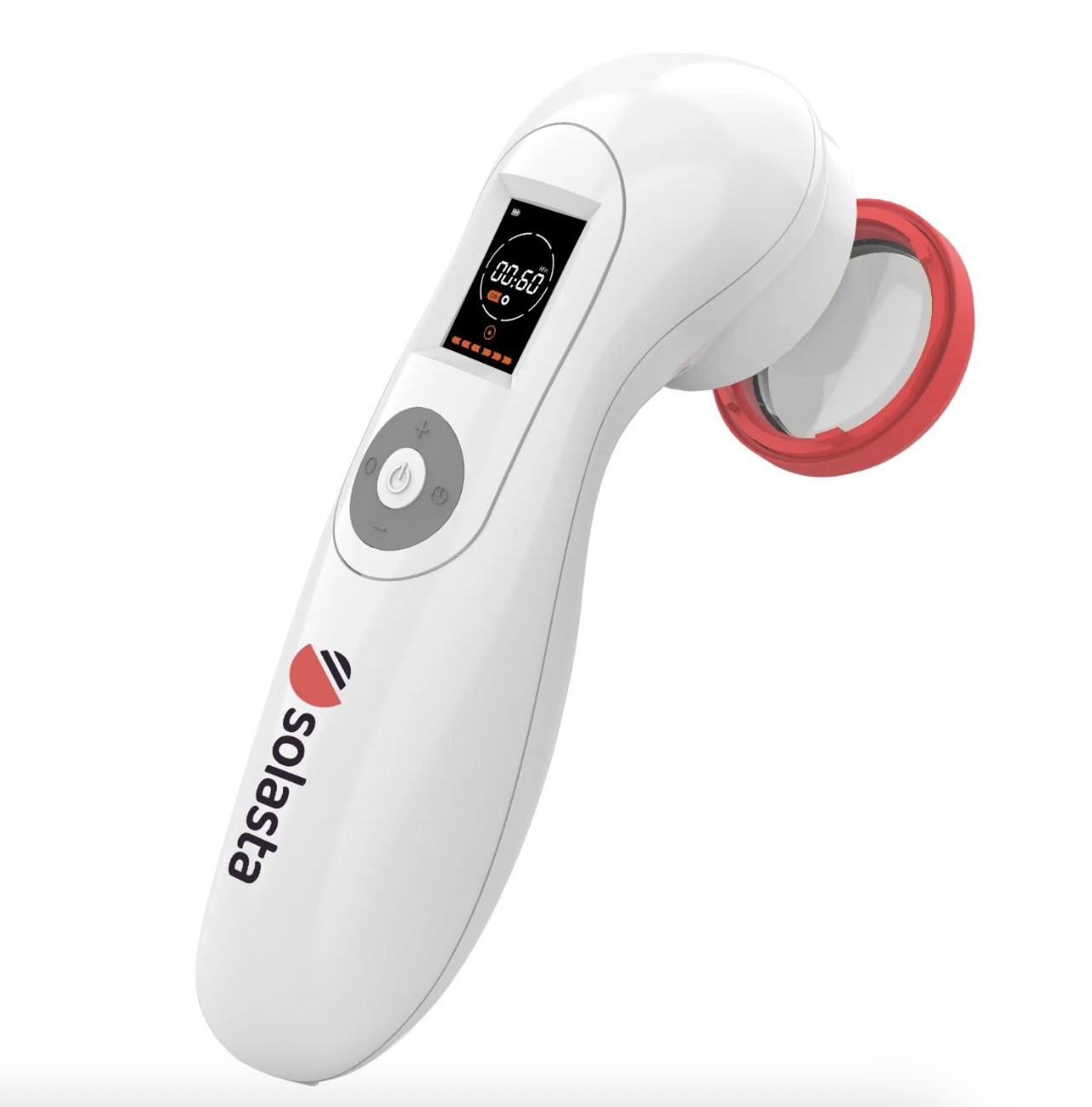
Deep penetrating home laser to support endometrial receptivity.
Receive your personalized protocol based on your unique health history with purchase of my device.
When Red Light Therapy Isn't Enough: Consider Restorative Reproductive Medicine such as NeoFertility
If you've been using red light therapy consistently and your cycles still aren't improving - or if you're experiencing repeated implantation failure despite healthy embryos - it may be time to investigate deeper underlying issues that require a more comprehensive medical approach like NeoFertility.
NeoFertility's Restorative Reproductive Medicine (RRM) approach recognizes that implantation failure is rarely due to a single factor. Instead, it often involves a complex interplay of issues that standard fertility treatments may not address. Here are key factors that can prevent implantation, even with perfect embryos:
Silent Infections and Chronic Inflammation
Silent infections - including hidden chlamydia, mycoplasma, and ureaplasma - can create chronic low-grade inflammation in the reproductive tract without obvious symptoms. These infections can be detected through PCR-DNA testing of semen or endometrial samples. Chronic infection leads to increased cellular permeability, allowing irritants and inflammatory mediators to infiltrate pelvic tissues, which can interfere with normal implantation. Clinics don’t usually screen for silent infections. (If you and your partner have had multiple sexual partners - it might be worth getting a more thorough workup done with a restorative reproductive provider. NeoFertility protocols may include targeted antibiotic therapy to treat possible chronic infections empirically, even when symptoms aren't obvious.
Autoimmune Dysfunction and NK Cell Activity
Your immune system plays a paradoxical role during implantation. On one hand, some autoimmune activity is necessary - progesterone naturally suppresses dopamine, which increases cellular permeability and allows an inflammatory response that helps remodel uterine arteries into the thin-walled spiral arteries needed for nutrient exchange between mother and fetus. On the other hand, excessive NK (Natural Killer) cell activity or other autoimmune dysfunction can attack the embryo as if it were a foreign invader, preventing implantation entirely.
NeoFertility addresses this through several mechanisms. Progesterone activates membrane progesterone receptors to produce immunomodulatory proteins like Progesterone Induced Blocking Factor (PIBF), which negates the killing effect of cellular immunity and protects the embryo from immune attack. For women with excessive cellular immune activity despite progesterone supplementation, dopaminergic drugs like dextroamphetamine or naltrexone (Low Dose Naltrexone/LDN) may be used to inhibit excessive NK cells and reduce tissue permeability. Naltrexone has been shown to treat clinical endorphin deficiency and help modulate immune dysfunction associated with implantation failure for over 20 years in Dr. Boyle’s clinic.
Mistimed Implantation Window Due to Poor Follicle Function
The implantation window is extraordinarily narrow - just a few days when the endometrium is receptive. NeoFertility recognizes that this window can be mistimed when follicle function is suboptimal, even if ovulation occurs. Poor follicle quality leads to inadequate progesterone and estradiol production during the luteal phase, which throws off the precise hormonal synchronization needed for the endometrium to be receptive at exactly the right time.
NeoFertility treatment aims to optimize follicle function before conception through medications like letrozole or clomiphene for follicle stimulation. Cycles are only counted as "good cycles" when specific hormonal targets are met, along with healthy cervical mucus production and normal bleeding patterns.
Oxidative Stress: When IVF Pushes an Already Struggling Body
Here's a concept that's often overlooked: if your body is already performing poorly due to diminished ovarian reserve, inflammation, or metabolic stress, the aggressive hormonal stimulation used in conventional IVF can push it into even greater oxidative stress. DNA fragmentation in sperm - caused by oxidative stress from free radical damage - is a well-documented issue in male infertility. The same oxidative damage can occur in eggs and the endometrial environment when the body is overstimulated.
Oxidative stress increases cellular permeability defects, worsens inflammation, and can damage mitochondrial function - all of which interfere with implantation. This is why some women experience worse outcomes with repeated IVF cycles rather than better ones. NeoFertility's restorative approach focuses on correcting the underlying deficiencies first - treating hypoandrogenemia, addressing adrenal fatigue, reducing inflammation with dopaminergic therapy, and optimizing follicle function with gentle stimulation protocols - before attempting conception. This restorative method can help the body handle the demands of pregnancy more effectively than pushing forward with aggressive IVF when the body isn't ready. (IVF attempts the bypass the inflammation in your body).
A Multifactorial Treatment Strategy
If red light therapy alone isn't delivering the implantation success you need, combining it with a structured medical program like NeoFertility may provide the comprehensive support required to address silent infections, immune dysfunction, mistimed windows, and oxidative stress - giving your body the best foundation for successful implantation.
Giving Yourself the Best Chance
If you're preparing for IVF or trying to conceive naturally, laser therapy can be a powerful addition to your fertility journey. It's non-invasive, safe, and works alongside your current treatments to address some of the key factors that influence implantation. While no single approach guarantees success, taking steps to optimize your uterine environment as well as egg quality can make a significant difference especially in women over 35.
Remember, implantation is one of the most mysterious phases of conception, and even with the best preparation, outcomes can be unpredictable. But by addressing inflammation, blood flow, and endometrial health and ensuring effective communication between the embryo and the endometrium, you’re giving yourself the best possible chance for success.
Tracy