Red Light Therapy for Endometriosis - Instant Genetic Changes
How to Flip Your Genetic Expression for Endometriosis Relief (Faster Than Diets or Supplements)
What is Photobiomodulation (PBM) for Endometriosis?
Photobiomodulation (PBM), traditionally known as low-level laser therapy (LLLT), is a non-invasive medical treatment that uses specific wavelengths of red and near-infrared light to target chronic inflammation and tissue damage. When applied to endometriosis, PBM penetrates deep into the pelvic basin to stimulate cellular repair, downregulate pain-inducing inflammatory cytokines, and optimize the uterine environment without using synthetic hormones or invasive surgery.
Today, we’ll take a look at some mind-blowing new research on red light therapy - sometimes called a "healing flashlight for your cells." We’re going to look at how light therapy flips a genetic switch inside your body almost instantly, and how it compares to the other tools in your endo toolkit like surgery, nutrition, and blood sugar management.
“Let’s have a real-talk moment, woman to woman. The endometriosis community is rightfully exhausted by online hype, fake “cures,” and influencers promising that a green juice or a specific device will make your lesions vanish.
Let’s be perfectly clear: Photobiomodulation does not dissolve existing endometriosis lesions. It is not a cure.
What it does do is shift the behavior of the living tissue surrounding the disease. Endometriosis functions like a runaway train, creating a localized “immune panic” that results in severe tissue warping, thin or “tired” uterine linings, and agonizing pelvic floor spasms.
By upregulating the PTEN gene, PBM acts as a powerful set of structural brakes. It calms the surrounding tissue down, tells your immune system to stop panicking, and helps stabilize the pelvis. ”
The Root of the Struggle: What's Actually Happening with Endo?
Before we talk about the solution, let’s get on the same page about the problem.
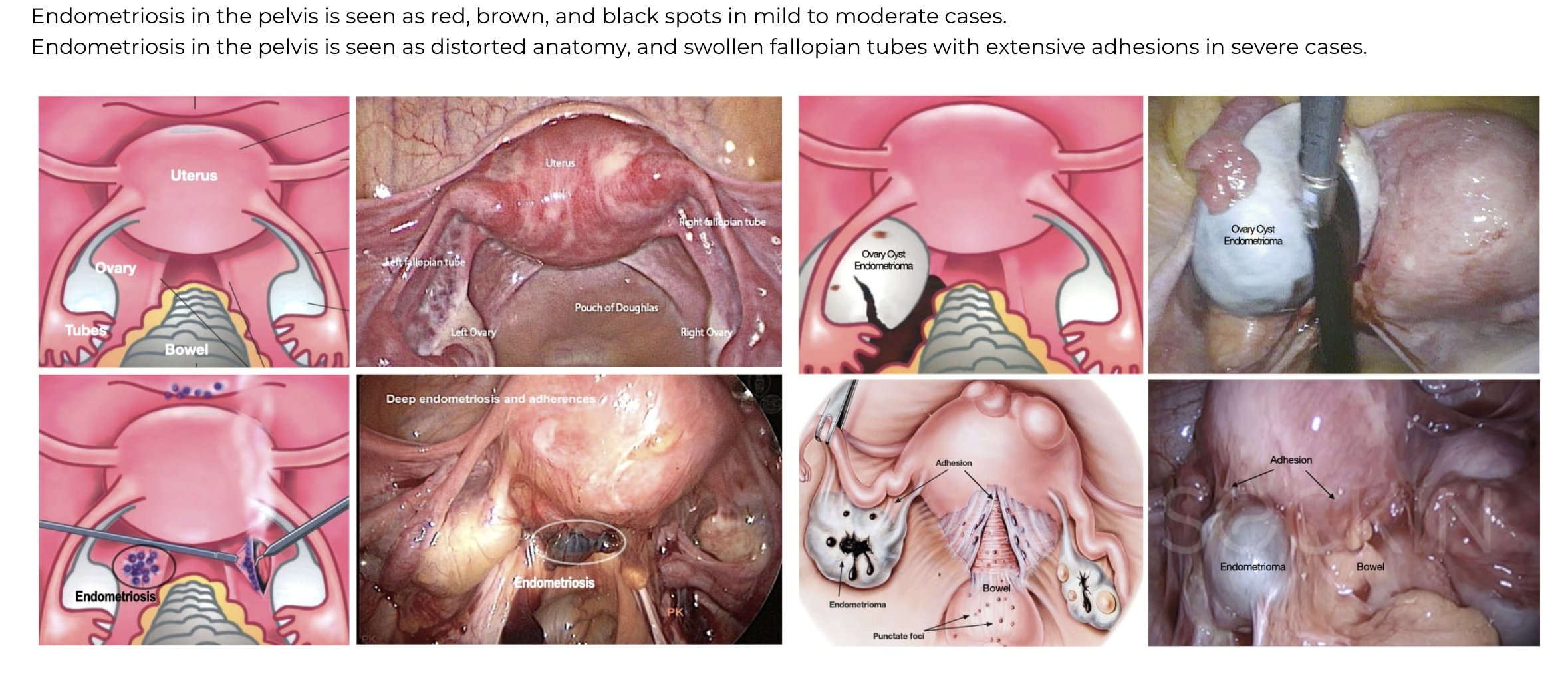
Endometriosis is when tissue similar to your uterine lining (the endometrium) decides to take a little road trip and grow in places it absolutely shouldn't - like your ovaries, your bladder, or your intestines.
Every single month, when your period comes, your hormones signal your uterine lining to swell and bleed. But guess what? They signal that misplaced tissue to do the exact same thing. Except that blood has nowhere to go.
This creates a cascade of chronic inflammation, deep pelvic pain, and internal scarring (also known as adhesions). Over time, this chronic inflammation leaves the actual lining inside your uterus feeling thin, irritated, and "tired." And when that lining isn't thriving, it becomes incredibly difficult for a pregnancy to stick.
The Timeline of Health: Why Most Changes Take Months
When you eventually get an endometriosis diagnosis (that’s a topic for another day), you usually end up on one of two paths (or both):
The Medical/Surgical Route: Laparoscopic excision surgery to physically remove the lesions.
The Holistic Route: Shifting to a strict anti-inflammatory diet, managing blood glucose to reduce insulin spikes (which feed inflammation), and taking a countertop full of supplements.
Now, let me be clear: I am a massive fan of both - especially when you’re trying to conceive. Nourishing your body with clean food and balancing your blood sugar is an essential, necessary foundational piece of reproductive wellness.
But if I’m being completely honest… it takes a really long time.
When you eat an anti-inflammatory diet or take a supplement, that molecule has to go through your entire digestive tract. It has to be broken down, absorbed by your gut, processed by your liver, and carried through your bloodstream. Only then does it hope to reach your pelvic tissues in a high enough concentration to make a difference.
To change your genetic expression (a process called epigenetics) through nutrition or supplements takes weeks, months, or even years of absolute, flawless consistency. And when you’re in agonizing pain today, or waiting six months for a diet to kick in so you can keep trying to conceive feels like an eternity.
Enter Photobiomodulation: Flipping the Switch Instantly
This is where the magic of light therapy comes in.
Scientists recently wanted to see if they could help damaged, struggling endometrial cells heal and rebuild. So, they took these cells into a lab and exposed them to a very specific wavelength of gentle low level red light.
They wanted to see if the light could literally rewrite their cellular instructions.
And it did not disappoint!
The results showed that the cells exposed to the red light didn't just sit there - they woke up. They multiplied faster, spread out beautifully, and experienced a massive growth power upgrade.
But here is the absolute kicker - the part that makes me really excited: The light instantly flipped a genetic switch.
It altered the gene expression inside the cells, specifically upregulating a vital gene called PTEN.
Why does the PTEN gene matter?
Think of PTEN as the master manager of cell safety and growth. It’s the gene responsible for forcing damaged, inflamed, or chaotic cells to stop behaving badly, repair themselves, and build a healthy, stable structure. For a uterine lining that has been beaten down by endometriosis inflammation, turning the PTEN gene "on" is like turning on a homing beacon for tissue repair and fertility.
What the PTEN Switch Means for Your Fertility Journey
If you are trying to conceive with endometriosis, you know how frustrating it is to hear that your uterine lining is "too thin" or looks "inflamed" on an ultrasound. For an embryo to successfully implant, the lining of your uterus (the endometrium) and the embryo have to engage in a complex, flawless chemical conversation.
When endometriosis inflammation leaves your lining cells running on empty, they simply don't have the cellular energy to build a thick, welcoming environment. By flipping the genetic PTEN switch via PBM, you are giving those specific lining cells a metabolic upgrade. It prompts them to multiply safely, organize properly, and clear out localized inflammation - effectively prepping the soil so a future pregnancy has the best possible chance to take root and thrive.
The Secret to the Speed: Skipping the Middleman
You might be asking, "Tracy, how can light change a gene instantly when my expensive supplements take months?"
It comes down to a process called Retrograde Mitochondrial Signaling.
The 4-Step Cellular Hotline: From Light Photon to Genetic Shift
When you apply targeted wavelengths of NIR to struggling endometrial tissue, your body skips the slow, multi-hour digestive process of a supplement. Instead, it initiates an immediate biochemical domino effect:
The Catalyst: Light photons hit a specific receptor inside your cell's power plants (the mitochondria) called Cytochrome C Oxidase.
The Energy Surge: This contact immediately releases trapped nitric oxide, causing an instant, massive influx of cellular fuel (ATP).
The Emergency Call: The cell releases a brief, highly controlled whisper of signaling molecules known as Reactive Oxygen Species (ROS). Think of this as a secure, high-priority hotline text sent straight to the cell's command center.
The Genetic Flip: The cell nucleus receives the text and immediately alters its instruction manual - turning down the genes that cause chronic inflammation and turning UP the PTEN gene to begin structural tissue repair.
Building Your Ultimate Endo Toolkit
Am I telling you to throw away your healthy food, stop tracking your blood sugar, and just shine a red light on your belly?
Absolutely not. Think of your endometriosis recovery like building a house.
Your anti-inflammatory diet and blood glucose management are your foundation. They keep the baseline fire of systemic inflammation low so your body isn't constantly in crisis mode.
Surgical excision by a specialist is like clearing away the debris after a storm.
Photobiomodulation (PBM) is your accelerator. It is the high-tech power tool that speeds up the healing of the foundation, blocks acute pain signals, and rewires your cellular data in real time.
In fact, clinical trials are already using intravaginal red light to target chronic pelvic pain and painful sex caused by endo, showing massive improvements in daily comfort.
The Power of "Putting on the Brakes"
Endo is like a runaway train inside your pelvis. The lesions are constantly producing their own estrogen, pumping out inflammatory chemicals and triggering your immune system to panic. This chronic chaos is what causes the tissue to scar, warp, and cause pain (some women have silent endo and don’t know they have it until they have been TTCing for a while and start more indepth investigations).
When you use specific wavelengths of red and near-infrared light, you aren't removing the train tracks. Instead, you are slamming on a powerful set of cellular brakes.
By flipping that genetic PTEN switch we talked about, the light tells the surrounding healthy tissue: "Hey, stop spiraling. Stop over-reacting. Let's calm the inflammation down and focus on cellular repair." It changes the hostile environment around the disease so it stops acting so destructively. It doesn't dissolve the lesion; it helps your body contain it so it stops running your life.
The Long-Game: What Happens to Endo Over the Years?
There is some very reassuring research that most women with endo are never told. For decades, the medical world framed endometriosis as a progressive disease that just endlessly grows and destroys everything in its path until you hit menopause.
But modern long-term data tells a very different story.
Large-scale tracking studies of women who have undergone multiple surgeries years apart show that for a huge percentage of women, endometriosis lesions actually hit a plateau and stop growing. Clinical data shows that in about 50% of cases, untreated lesions remain completely static or even naturally regress over time. Once a lesion establishes its own blood supply and reaches a certain threshold, it usually stops expanding outward. It just sits there, burning in place and causing cyclic inflammation. And as we get older and head toward perimenopause, the metabolic activity of these lesions naturally begins to "burn out."
Why PBM is Your Fast-Pass to the Plateau
If the natural history of endometriosis is that it eventually wants to slow down and stabilize, our goal shouldn't be to fight a violent war against our bodies. Our goal should be to help our bodies reach that peaceful, stable "plateau" as fast as humanly possible especially when you’re trying to conceive.
And that is exactly what red light therapy does.
By using PBM, you are helping your immune system calm the fire today. You are telling the tissue to prioritize resilience over chaos now, rather than waiting decades for your body to figure it out on its own. You aren't magically erasing your past with this disease, but you are absolutely changing how your body handles it tomorrow. And after years of struggling, a reliable set of brakes is exactly what we need to finally take back control of the wheel.
When it comes to managing endometriosis, the short answer is: Using BOTH is the gold standard. However, they do completely different jobs. If you have to choose one over the other based on your symptoms, or if you want to understand how to layer them together, it helps to understand how light behaves when passing through human tissue.
What’s the Best Red Light Device to Use for Endometriosis?
1. The Intravaginal Device: Best for Deep Pelvic Pain, Adhesions, & Sex Pain
If your primary struggles are deep pelvic pain, painful intercourse (dyspareunia), or preparing your uterine lining for fertility, the intravaginal device is king.
The Science of Proximity: Light loses energy (attenuation) the further it has to travel through skin, fat, and muscle. An intravaginal wand bypasses all of those outer layers entirely. It sits millimeters away from your pelvic floor muscles, your cervix, the pouch of Douglas (where a massive amount of endo inflammation pools), and the uterus.
What it targets: It is highly effective at downregulating pro-inflammatory cytokines in the deep pelvis, calming overactive pelvic floor muscles, and directly targeting the uterine lining to flip that genetic PTEN switch.
2. The Abdominal Laser: Best for Cramping, Digestion, & Post-Surgicial Scars
If your primary symptoms are severe menstrual cramps, "endo belly" (bloating and GI distress), or recovering from a laparoscopic excision surgery, the external laser over the abdomen is your best friend.
The Depth Factor: To reach deep into the abdomen from the outside, you need a high-quality device that utilizes Near-Infrared Light (NIR) - usually wavelengths between 808nm and 850nm. Red light (630nm - 660nm) handles the skin and surgical scars beautifully, but NIR is required to penetrate several centimeters deep into muscle layers.
What it targets: It improves microcirculation to the abdominal wall to stop painful muscle spasms (cramps), calms systemic gut inflammation, and helps heal surgical scars cleanly while preventing external adhesions.
The Power Gap: Why LED Wraps Can Miss the Mark for Deep Pelvic Pain
If you’ve spent any time looking into red light therapy, you’ve probably seen flexible LED wraps, mats, or belts advertised all over social media. And while these are fantastic for skin health or superficial back pain, endometriosis demands a completely different level of physics.
It all comes down to a concept called tissue attenuation - which is just a fancy scientific way of saying that light loses energy the further it has to travel through skin, subcutaneous fat, and muscle layers.
The Surface Issue: A standard home LED wrap emits a broad, scattered light that gets almost entirely absorbed by the top few millimeters of your skin. It simply doesn't have the driving force to reach your ovaries, bowel, or pelvic floor. Some wraps get quite hot - and the heating can increase circulation (but too much heat isn’t helpful either).
The Solution: To truly move the needle on endometriosis, we need to bypass the skin barrier. This is why Intravaginal PBM Wands are so revolutionary - they operate with a "zero skin gap," delivering healing light directly to the mucosal tissues closest to the uterus. When treating from the outside, a focused Class 3B (Solasta) or Class IV medical laser is required to deliver a concentrated, coherent beam capable of driving energy deep into the pelvic basin.
How to Layer Them Together (The Ultimate Protocol)
If you have access to both, combining them creates a comprehensive treatment approach. Because photobiomodulation works on a systemic loop, using both allows you to flood the entire pelvic basin with cellular energy.
Learn more about device stacking/layering here.
Frequently Asked Questions About Red Light Therapy for Endometriosis
Q: What is PBM for endometriosis?
A: Photobiomodulation (PBM), also known as low-level laser therapy (LLLT) or red light therapy, is a non-invasive treatment that uses specific wavelengths of red and near-infrared light to treat endometriosis. It works by penetrating deep into pelvic tissue, where the light photons are absorbed by cell mitochondria. This process reduces chronic pelvic inflammation, blocks acute pain signals, accelerates tissue repair, and can even alter cellular gene expression to help heal damaged tissue.
Q: How quickly does red light therapy change gene expression?
A: Red light therapy alters cellular gene expression almost instantly on a cellular level. Unlike diets or supplements, which take weeks or months to digest and cause epigenetic changes, light therapy bypasses the digestive tract completely. It triggers a process called Retrograde Mitochondrial Signaling, which immediately sends secondary messengers to the cell nucleus to upregulate healing genes - such as the PTEN gene - and downregulate inflammatory cytokines within seconds of exposure.
Q: Can photobiomodulation improve fertility in women with endometriosis?
A: Emerging research suggests that PBM can support fertility by improving the health of the uterine lining (the endometrium). Endometriosis often causes the uterine lining to become thin, scarred, or highly inflamed, making embryo implantation difficult. Clinical lab studies show that targeted red light therapy stimulates these lining cells to multiply safely, spread properly, and alter their gene expression to create a healthier, more receptive environment for pregnancy.
Q: Does red light therapy replace surgery or an anti-inflammatory diet for endo?
A: No, PBM does not replace laparoscopic excision surgery or a foundation of proper nutrition and blood sugar management. Instead, photobiomodulation acts as a powerful accelerator in your endometriosis toolkit. While surgery removes physical lesions and an anti-inflammatory diet lowers your baseline systemic inflammation, red light therapy is used alongside these treatments to fast-track localized tissue healing and provide rapid, drug-free pain relief.
Q: How long do the pain relief benefits of PBM last for endometriosis?
A: Because endometriosis is a chronic, systemic condition that continually produces inflammatory signals, PBM requires a regular protocol. A single session can provide immediate pain relief lasting from several hours to a few days by blocking localized nerve signals. However, completing a consistent 4-to-6-week loading protocol can suppress inflammatory genes and modify cellular behavior for several weeks to months. Ongoing maintenance sessions (1 - 3 times per week) are generally recommended to keep the inflammation ‘turned off’.
We are moving into an exciting new era of women’s health. An era where we don't just have to accept "shutting our bodies down" as the only answer to chronic conditions. We can actually look at our bodies at a cellular level, understand the genetics, and use innovative technology to speak a language our cells understand.
Resources:
https://blog.tracydonegan.org/blog/red-light-therapy-pelvic-inflammation-and-endometriosis