If you’ve been diagnosed with a prolapsed uterus, you’re likely navigating a mix of worry and frustration. Many women feel blindsided by the diagnosis, wondering why proactive pelvic health isn't a more common conversation (as a midwife and birth doula I find it disappointing that so few women know about the benefits of women’s pelvic health physiotherapy).
One of the most frequent questions I receive is: “Can a pelvic light therapy wand, like the Fringe pelvic wand, actually help with a prolapsed uterus?”
Let’s look at the science of photobiomodulation (red light therapy) and how targeted internal and external support can assist in your recovery.
Understanding Uterine Prolapse and Pelvic Heaviness
A prolapsed uterus occurs when the pelvic floor muscles and connective tissues (fascia) become weakened or overstretched. Without adequate support, the uterus descends (drops) into the vaginal canal.
Common symptoms include:
A persistent feeling of pelvic heaviness or "dragging."
A visible or felt bulge in the vagina.
Pressure that intensifies after lifting or at the end of a long day.
Whether this occurred postpartum, during the hormonal shifts of menopause, or due to chronic intra-abdominal pressure, these symptoms are manageable with a multi-layered approach.
If you’ve ever been told to “wait until it gets bad enough for surgery,” or told to google Kegels, you are not alone. Many women feel dismissed, ashamed, or too embarrassed to even say the word “prolapse” out loud. The good news is, conservative, non‑surgical options do exist. Pelvic floor physiotherapy, pessaries, lifestyle changes, and newer technologies like pelvic light therapy (photobiomodulation) are opening up gentler ways to support tissue healing, circulation, and pelvic floor function for some women with mild prolapse and related pelvic floor symptoms. Early research suggests these approaches may help improve quality of life and symptom scores when used as part of a personalized care plan. So how does pelvic light therapy help?
How Pelvic Light Therapy Supports Vaginal Tissue
The Fringe pelvic wand is an internal device that utilizes red and near-infrared light therapy. When applied to the vaginal walls, this targeted light:
Boosts Cellular Energy: Increases ATP production to assist in tissue repair.
Stimulates Collagen & Elastin: Encourages the "scaffolding" of your pelvic floor to become more resilient.
Enhances Blood Flow: Improves circulation to the pelvic muscles and mucosa, which is vital for tissue integrity.
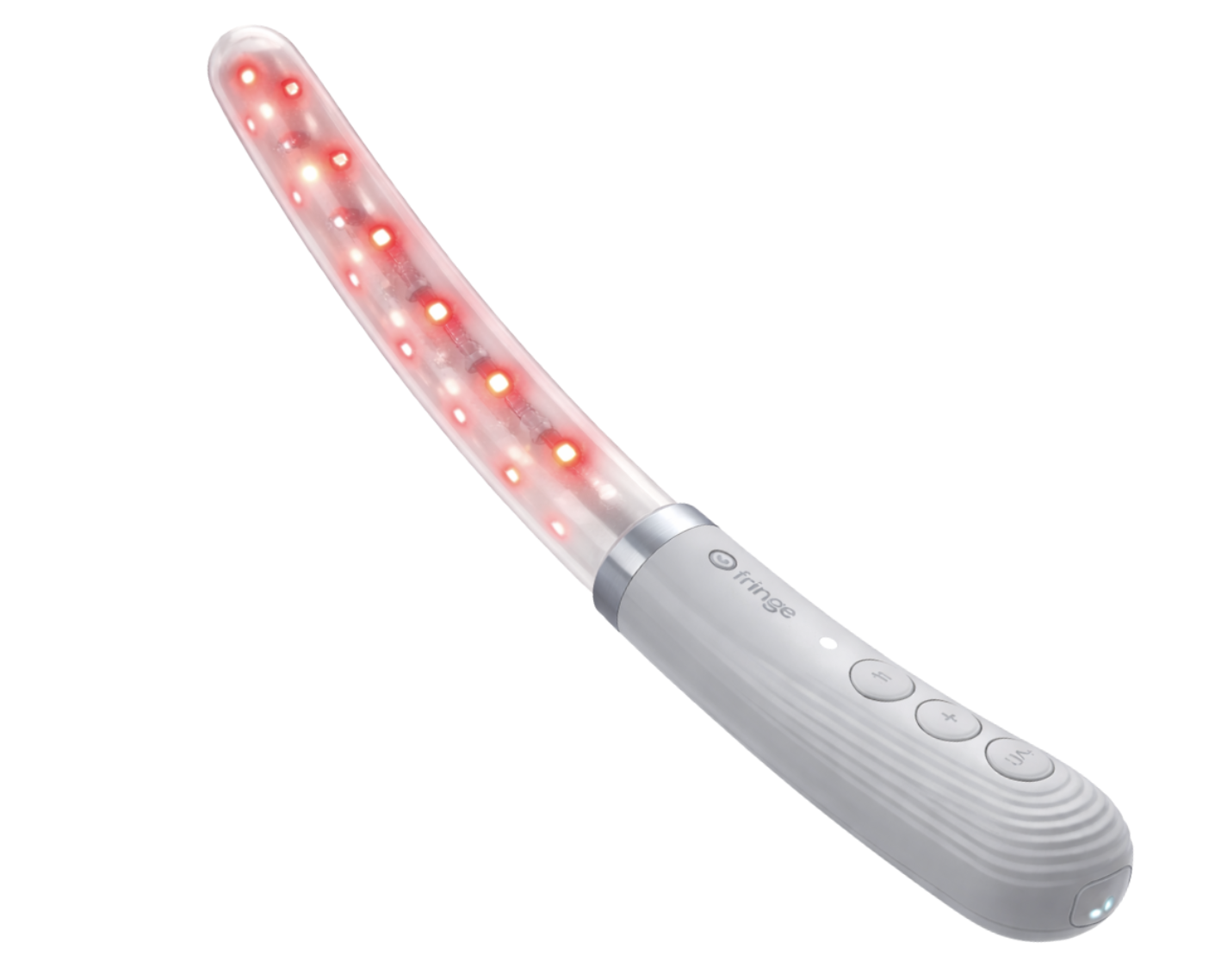
Internal Pelvic Light therapy with Red & Near Infra Red (essential for deeper structures in the pelvis)
Realistic Expectations
It is important to be very clear: A light therapy wand cannot physically lift a prolapsed uterus back into its original position. It is not a mechanical replacement for a surgical repair or a pessary.
However, it is a powerful supportive therapy. By improving the health and elasticity of the vaginal tissues, it can significantly reduce symptoms like heaviness and dryness, making a Stage I or II prolapse feel much more comfortable.
In some situations, red light therapy is best considered as comfort care, not a core treatment. For example:
Advanced prolapse where the uterus is at or beyond the opening of the vagina
Significant functional limitations where your specialist is strongly recommending surgery or a pessary as first‑line care
In these cases, the wand may still support tissue health, comfort, and intimacy - but we’ll be clear about realistic expectations from day one.
The "Outside In" Advantage: The Solasta Home Laser
While the Fringe wand works internally, some women find greater symptomatic relief by adding a "top-down" approach using the Solasta home laser over the lower abdomen.
The Solasta is a clinical-grade laser that offers deeper penetration than standard LED panels (it’s used in direct skin contact). When used over the lower abdomen, it supports the pelvic structure from the outside:
Targeting Deep Ligaments: The uterus is held in place by deep ligaments (such as the broad and round ligaments). Lasers can reach deeper structural layers to support tissue integrity.
Reducing Pelvic Congestion: Prolapse often involves "heavy" sensations caused by poor lymphatic drainage. Applying the laser to the lower abdomen helps stimulate flow and reduce localized inflammation in the pelvic bowl. (The protocol you receive from me will also include other sites for lymphatic drainage).
Fascial Health: It supports the health of the fascia and abdominal wall, which act as the external "neighbors" to your pelvic organs.
Moving Beyond DIY Pelvic Care
Buying a device is only the first step; knowing how to apply it to your specific anatomy is where the results happen. When we work together to integrate these tools, you receive:
A Personalized Protocol: Specific instructions on frequency and placement for both your internal wand and your abdominal laser.
Ongoing Follow-Ups: We track your progress and adjust the plan as your symptoms improve.
Clinical Integration: I ensure your light therapy plan aligns with the work you’re doing with your PT, OB-GYN, or urogynecologist.
FAQ: Pelvic Light Therapy & Prolapse
1. Is red light therapy safe for internal use? Yes. Devices like the Fringe wand use non-ionizing light that does not produce damaging heat, making it safe for sensitive mucosal tissues.
2. Why use a laser on the abdomen for an internal issue? The pelvic floor functions as part of a larger system. The Solasta laser addresses deep-seated inflammation and supports the external ligaments and fascia that help manage internal pelvic pressure.
3. Can I use both the wand and the Solasta laser together? Absolutely. Using them in tandem provides a comprehensive "inside-out" approach. One focuses on the vaginal "shelf," while the other focuses on deeper pelvic congestion and structural support.
4. How long does it take to see results? Consistency is essential. Most women report improvements in tissue comfort and a reduction in the "dragging" sensation after 4–8 weeks of regular, guided use.
5. Does this help with bladder leaks? By improving the health of the vaginal wall (which provides the structural base for the bladder), many women do find a reduction in "urgency" and mild stress incontinence.
Evidence-Informed Options
A prolapsed uterus is a signal from your body that your support tissues need focused attention. Using tools like the Fringe wand and Solasta laser offers a gentle, evidence-informed way to nourish those tissues and regain comfort in your daily life.
Tracy
Resources:
Lanzafame RJ, de la Torre S. The Rationale for Photobiomodulation Therapy of Vaginal Tissue for Treatment of Genitourinary Syndrome of Menopause: An Analysis of Its Mechanism of Action, Treatment Protocol, and Preliminary Clinical Data. Photobiomodul Photomed Laser Surg. 2019.
Transvaginal PBM (SoLá device). Transvaginal Photobiomodulation for the Treatment of Chronic Pelvic Pain. Women’s Health (Lond). 2021.
PBM + pelvic floor: A randomized, double-blind, placebo-controlled clinical trial of photobiomodulation to prevent pelvic floor muscle fatigue in women with stress urinary incontinence. 808 nm, 3 J/point.
PBM/sMF + Pilates for SUI: Randomized, double-blind, placebo-controlled trial of PBMT/sMF and Pilates in women with stress urinary incontinence.